
Ear training is not a test you pass once. It is repeated practice: hear a sound, name it, and check the name. The skill is the naming. The tool only supplies the sound and the answer.
Two exercises you can open
Signed-out ear training asks you to name a chord as major or minor. The chord quiz is a separate page that shows the keys.
Open the Chord Recognition QuizYou are practicing a name, not a mood
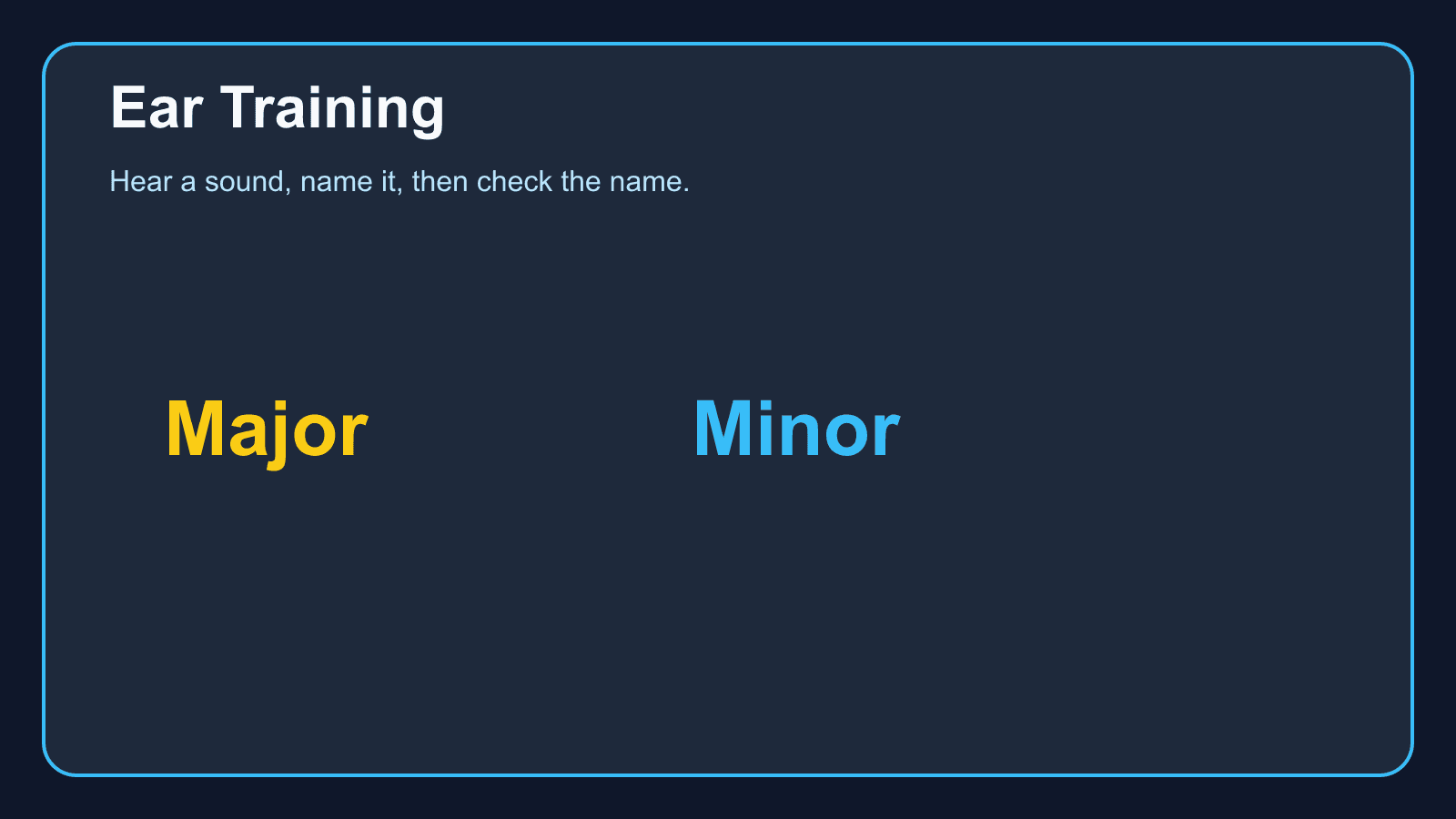
“That sounds sad” is a reaction. “That is minor” is a name you can check. Beginner ear training on this site starts with that kind of name. The open exercise for a signed-out visitor is Major or Minor. Other modes, including intervals, scales, and progressions, stay locked until you have an account.
Do not expect the first session to unlock every mode. The honest starting point is one contrast.
Two tools, two jobs
The Ear Training tool plays a sound and asks you to name it. The Chord Recognition Quiz shows a shape on the keyboard and asks you to name the chord. One is the ear. The other is the eye. This page is about the ear.
The exercises you can actually try are listed on Beginner Ear Training Exercises.
Hearing a name is not the same as playing it
Naming a major chord does not by itself put that chord under your fingers. Playing is still practice. Ear training tells you whether you noticed the sound.
There is no promise about how many days this takes. Short, checked repetitions matter more than a long session you cannot remember.
Start practicing piano chords with Looty Chords
Begin your free trial, compare plans, or read answers to common questions about chord practice and MIDI setup.