
Minor piano chords carry a darker or more reflective sound than major chords. This page focuses on drilling minor shapes in Looty Chords alongside major chords in the same key. For a full explanation of how minor chords are built and where they appear in songs, see the dedicated minor chords guide linked below.
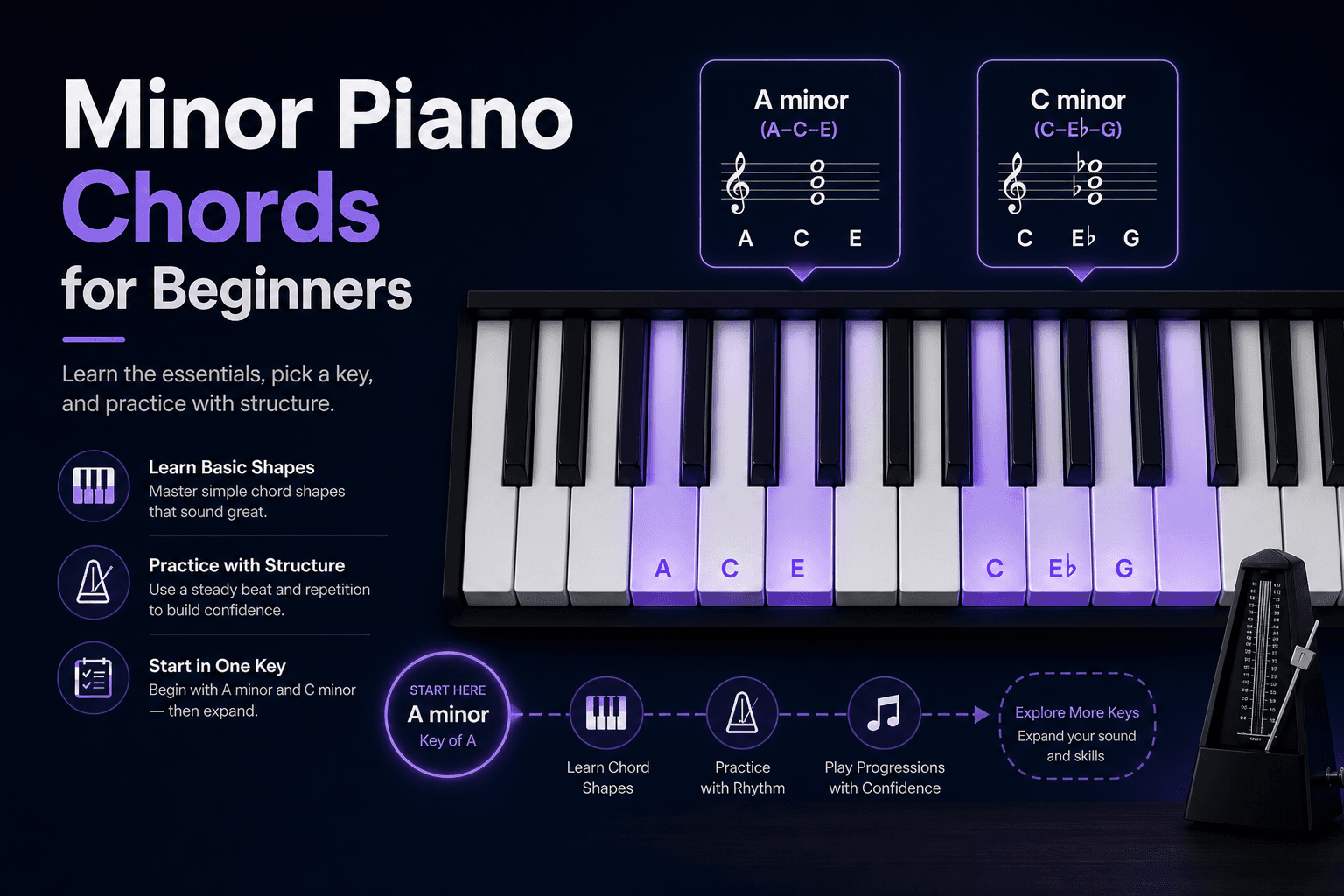
What Makes a Chord Minor?
A basic minor triad uses a root, a minor third, and a perfect fifth. The middle note sits lower than in a major chord—that small change creates the minor color.
On chord charts you will see names like Am, Dm, or Em. The “m” signals minor. Looty Chords displays the full chord name and diagram so you connect symbol to hand shape.
Minor chords are part of the seven essential chord types practiced in each key within Looty Chords.
For chord construction, sound, and practice strategies, read Minor Piano Chords Explained.
Major vs. Minor in Real Music
Verses often lean minor while choruses lift to major—or the reverse depending on the song. Ballads may stay minor longer; upbeat tracks bounce between both.
If you only practice major chords, half of a typical chart will feel foreign. Training both in the same key builds balanced fluency.
Random practice in Looty Chords mixes major, minor, and other essential types so you cannot predict the next quality—just like performing.
Tips for Learning Minor Shapes
- Notice how minor chords relate to major chords in the same key—fingers often move minimally.
- Practice slowly with the metronome until minor changes are even with major changes.
- Say chord names aloud while you play to reinforce memory.
- Use MIDI practice so minor thirds feel physical, not abstract.
- Stay in one key until minor and major prompts both feel automatic.
When minor chords stop feeling like “hard switches,” you are ready to add another key or explore chord progressions inside Looty Chords.
Drill minor chords in Practice Mode
Check minor chord shapes on the interactive keyboard, then practice timed major and minor changes together.