
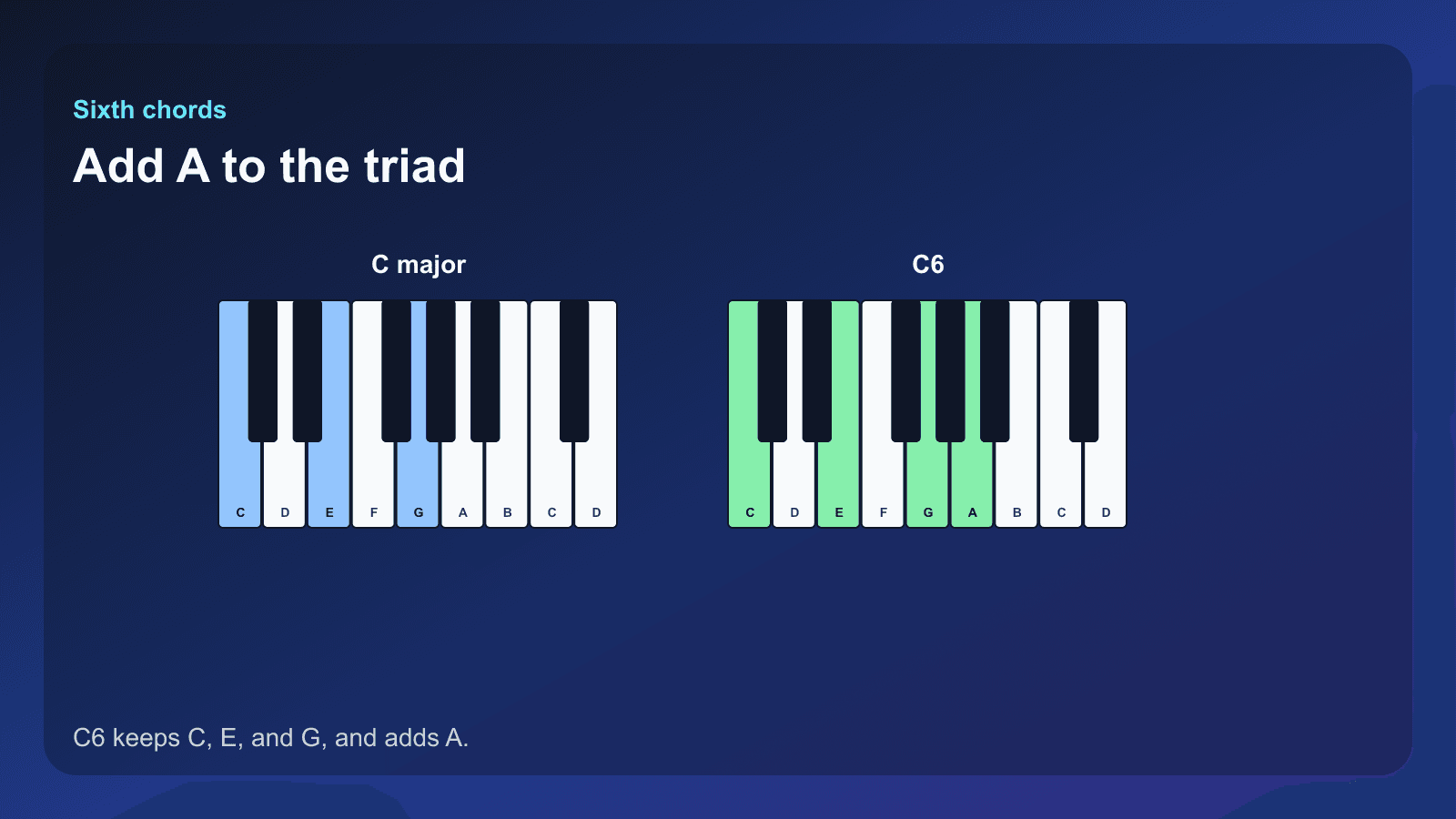
A sixth chord adds one note to a triad: the sixth above the root. C major is C, E, G. C6 adds A, so the chord is C, E, G, A. Cm6 starts from C minor and adds the same A: C, E-flat, G, A. The sixth is color. It is not a seventh.
Add the sixth, then ask Chord Finder
C Major: C – E – G
The triad before the sixth is added.
C 6: C – E – G – A
A is the added sixth.
C m6: C – Eb – G – A
The triad is minor. A is still the sixth.
Chord Finder names that use exactly these notes
- C6
- Am7
Major sixth and minor sixth
The triad decides the color. A major triad plus a sixth is a major sixth chord. A minor triad plus a sixth is a minor sixth chord. C6 and Cm6 share C, G, and A. Only the third changes: E in C6, E-flat in Cm6.
A seventh chord is a different addition. C7 replaces nothing and adds B-flat, a seventh above C. C6 adds A, a sixth above C. The symbols look similar and the notes do not.
C6 and Am7 share pitch classes
C, E, G, A are the notes of C6. Those same four pitch classes are also A, C, E, G, the notes of Am7. The collection does not tell you which name the music is using. If C is the root the harmony is acting as, C6 is the name. If A is the root, Am7 is the name.
The demo asks Chord Finder what it returns for C, E, G, A. It shows that result and does not claim the finder lists every possible name. Read more in Why the Same Notes Can Have Different Chord Names, then compare C6 and Cm6 with the sixth-chord category, Chord Explorer, and the symbols guide.
Start practicing piano chords with Looty Chords
Begin your free trial, compare plans, or read answers to common questions about chord practice and MIDI setup.