
Rhythm is when sounds and silences happen. A melody can use the same pitches and feel completely different if the long and short notes change. Tempo only sets the speed of whatever rhythm you already have.
Rhythm Reading exercises
These titles and descriptions are the trainer’s own 4/4 reading exercises.
- Quarter NotesFour steady quarter notes in each bar. Count 1 2 3 4.
- Half NotesTwo half notes per bar. Each note lasts two beats.
- Whole NotesOne whole note per bar, held for all four beats.
- Quarter RestsPlay the notes and stay silent on the rests.
- Paired Eighth NotesEven eighth notes. Count 1 & 2 & 3 & 4 &.
- Quarters and EighthsMix a quarter note with a pair of eighths.
- Eighth RestsShort silences between eighth-note attacks.
A pattern of sound and silence
A note is a sound with a length. A rest is a silence with a length. Rhythm is the order of those lengths. Four even sounds in a bar is a different rhythm from a long sound, a silence, and two short sounds, even if the pitches never change.
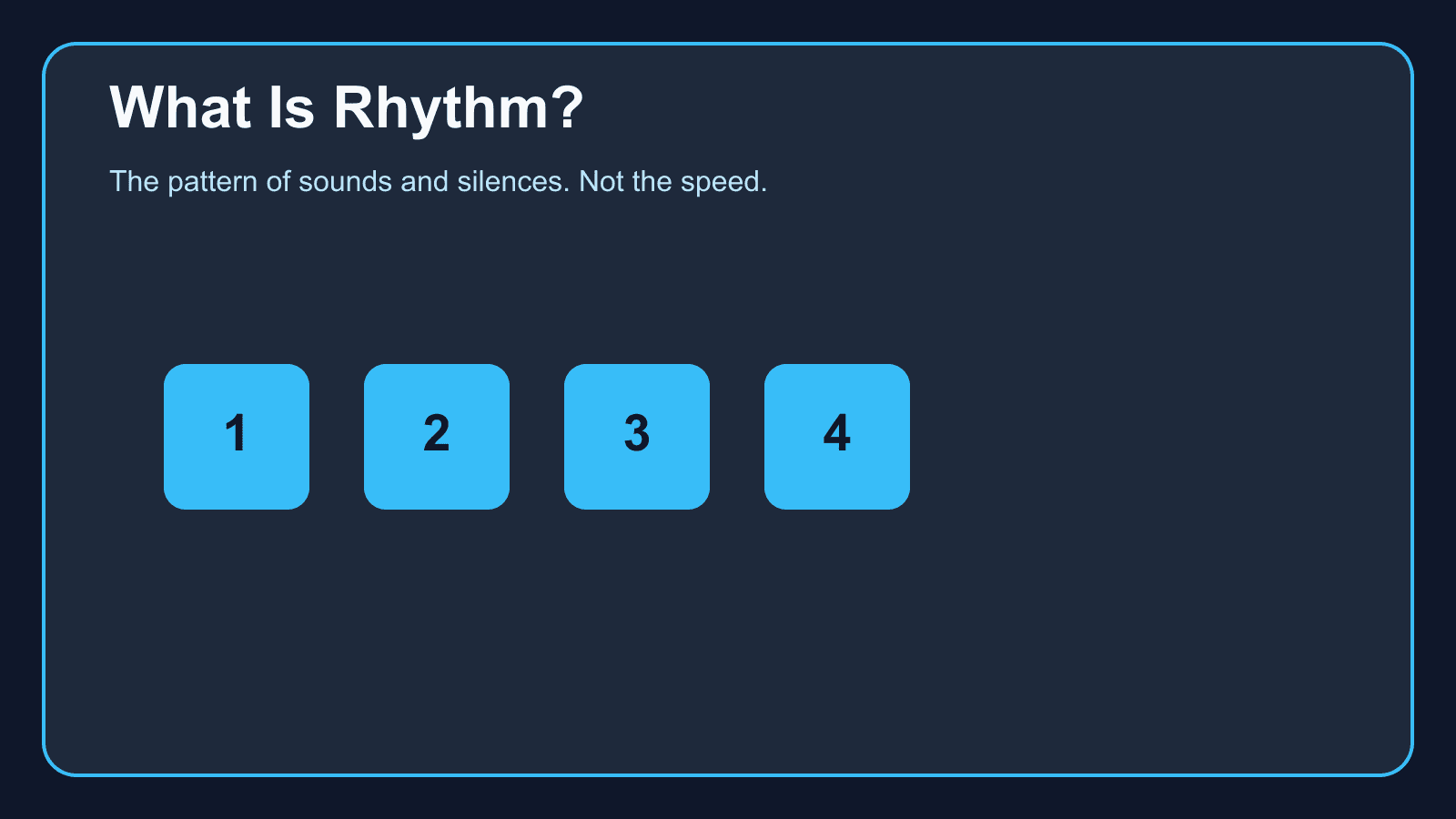
The Rhythm Trainer’s first reading exercise is four quarter notes counted “1 2 3 4.” That is a rhythm: one sound on each beat.
Rhythm is not tempo, and it is not the time signature
Tempo, measured in beats per minute, tells you how quickly the beats pass. The same quarter-note pattern can be slow or fast. The time signature tells you how the beats are grouped. Rhythm is the pattern inside that grouping.
Those are three lessons on purpose. Meter is next: Beats, Meter, and Time Signatures. Tempo is What Is Tempo?
Hear a pattern before you speed it up
The Rhythm Trainer can show the notation, count with you, or ask you to tap. Start in Watch & Listen or Count With Me. Tap only after the pattern is clear.
This page does not ask you to clap a new exercise. Counting and clapping, and rhythm under chord changes, are separate practice pages.
Start practicing piano chords with Looty Chords
Begin your free trial, compare plans, or read answers to common questions about chord practice and MIDI setup.