
Knowing your piano chords lets you play an enormous share of popular music—but not literally every song, and not always exactly as the recording sounds. Chord charts, accompaniment, and progressions get you remarkably far. Extensions, unusual voicings, key changes, and exact melodic detail are where chord knowledge alone runs into real limits. Here is what chords actually give you, and where you still need more.
What Chord Knowledge Actually Unlocks
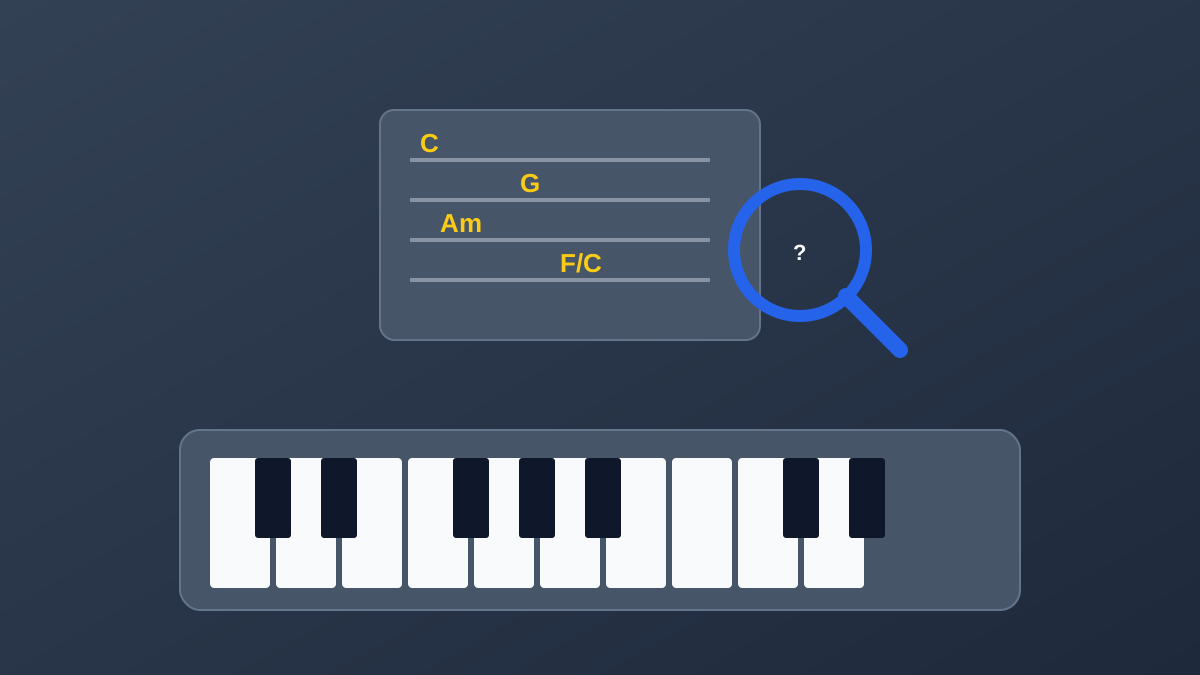
Once you know a solid set of chords in a key, you can follow a chord chart or lead sheet for a huge number of songs—symbols like C, Am, G7, and Fmaj7 written above lyrics tell you exactly what to play, in what order. That alone covers accompaniment for singers, worship music, jam sessions, and casual playing.
For the full picture of how chords connect to real repertoire, see How Piano Chords Help You Play Songs.
Where Chord Knowledge Alone Falls Short
- Extended and altered chords—9ths, 11ths, 13ths, and altered tensions common in jazz and R&B are not covered by basic triads and sevenths.
- Slash chords and inversions—a chart marked C/E or G/B asks for a specific bass note or voicing, not just any version of the chord.
- Key changes and modulation mid-song, which ask you to shift your whole chord vocabulary on the fly.
- The exact melody, riffs, and instrumental parts a recording uses—chords give you harmony, not the specific notes a singer or lead instrument plays.
- Rhythm and groove—chord names tell you what to play, not the strumming or comping pattern that makes a song sound right.
Inversions and Voicings Change How "Playable" a Song Feels
The same chord can be played several different ways—root position, first inversion, second inversion, or a rootless voicing—and the choice matters for how smoothly your hand moves between chords and how the song actually sounds. Knowing chord names is the first step; knowing which voicing fits the moment is a separate skill built through listening and practice.
See Piano Chord Voicings for how inversions and voicings expand what a basic chord vocabulary can do.
Rhythm and Ear Training Fill the Remaining Gaps
A chord chart tells you what to play, not exactly when or how. Timing—landing changes on the beat, matching a song's groove—comes from metronome practice, not chord knowledge itself. Recognizing which chords a song actually uses, especially when you do not have a chart, depends on ear training.
If you are trying to figure out a song's chords by listening, How Can I Tell Which Chords a Song Uses? covers the practical methods, and Ear Training builds the underlying skill.
Progressions Close Most of the Remaining Gap
Learning common progressions—not just individual chords—closes a lot of the distance between "knowing chords" and "playing songs fluently." Patterns like I–V–vi–IV repeat across hundreds of songs, so recognizing the pattern lets you predict what is coming instead of treating every song as unfamiliar.
Start with Piano Chord Progressions for Beginners to build that pattern recognition.
Build the foundation, then close the gaps
Chord knowledge is the biggest lever you have for playing real songs. Practice your chords with timing, then layer in progressions, voicings, and ear training as you go.