
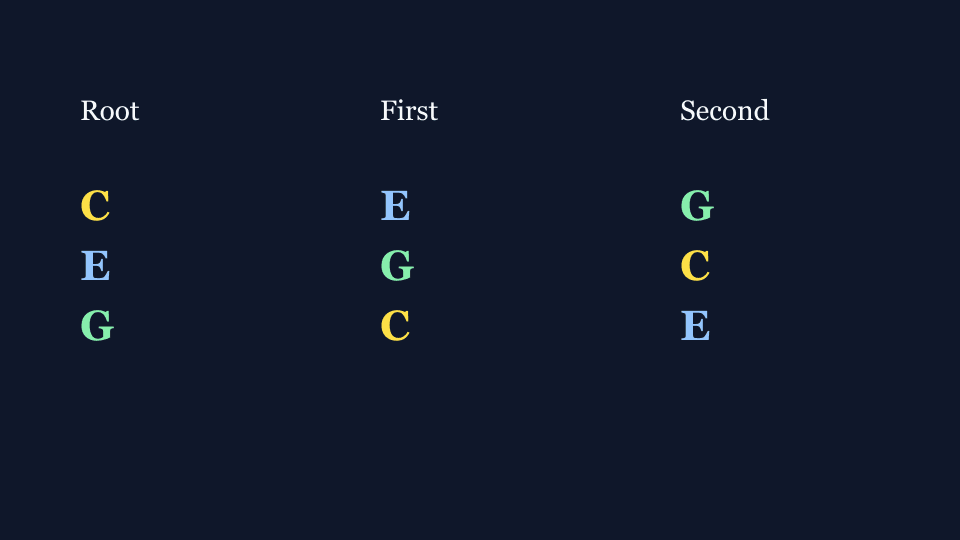
A chord inversion is the same chord with a different note in the bass. C major is still C, E, and G. Root position starts on C. First inversion starts on E. Second inversion starts on G. Nothing new is added to the chord. The notes are only stacked in a different order.
Hear the positions
These notes come from the same inversion model as the chord pages.
Root position
C – E – G. Lowest note: C. Written C.
Right-hand fingering: 1 – 3 – 5
First inversion
E – G – C. Lowest note: E. Written C/E.
Right-hand fingering: 1 – 2 – 5
Second inversion
G – C – E. Lowest note: G. Written C/G.
Right-hand fingering: 1 – 3 – 5
Root position is the starting shape
Root position puts the root, the note the chord is named after, at the bottom. C major in root position is C–E–G. The lowest sounding note is C.
This is the shape most chord charts show first. It is the clearest way to see how a triad is built: root, third, and fifth.
First and second inversion
First inversion moves the root up an octave and leaves the third on the bottom. C major becomes E–G–C. The chord is still C major. The bass note is E, so the symbol is C/E.
Second inversion leaves the fifth on the bottom. C major becomes G–C–E, written C/G. A triad has these two inversions. A seventh chord can also put its seventh in the bass, which is a third inversion. This guide stays with triads.
Why pianists use inversions
The bass note changes the feel of the chord and where your hand sits. A nearby inversion can keep the next chord from jumping across the keyboard. The root is still the chord’s name. It does not have to be the lowest note every time.
The smooth chord changes guide shows one comparison. It does not pick a single inversion for every song.
Inversion notation is not every slash chord
C/E means a C chord with E in the bass. E is already a C major chord tone, so C/E is first inversion. C/B also names a bass note, but B is not in C–E–G. That slash chord is not an inversion of the C major triad. The bass has been added from outside the chord.
The piano chord voicings guide covers closed, open, shell, and rootless shapes. Those are voicings. An inversion is the narrower idea on this page: the same chord tones, rotated so a different one is lowest.
Start practicing piano chords with Looty Chords
Begin your free trial, compare plans, or read answers to common questions about chord practice and MIDI setup.