
If you have ever heard someone strum a guitar or hold down keys on a piano and produce a full, rich sound, you have heard chords in action. Chords are the building blocks of accompaniment in pop, gospel, jazz, rock, and countless other styles. For piano beginners, chords offer a practical entry point that connects directly to real songs.
The Simple Definition of a Chord
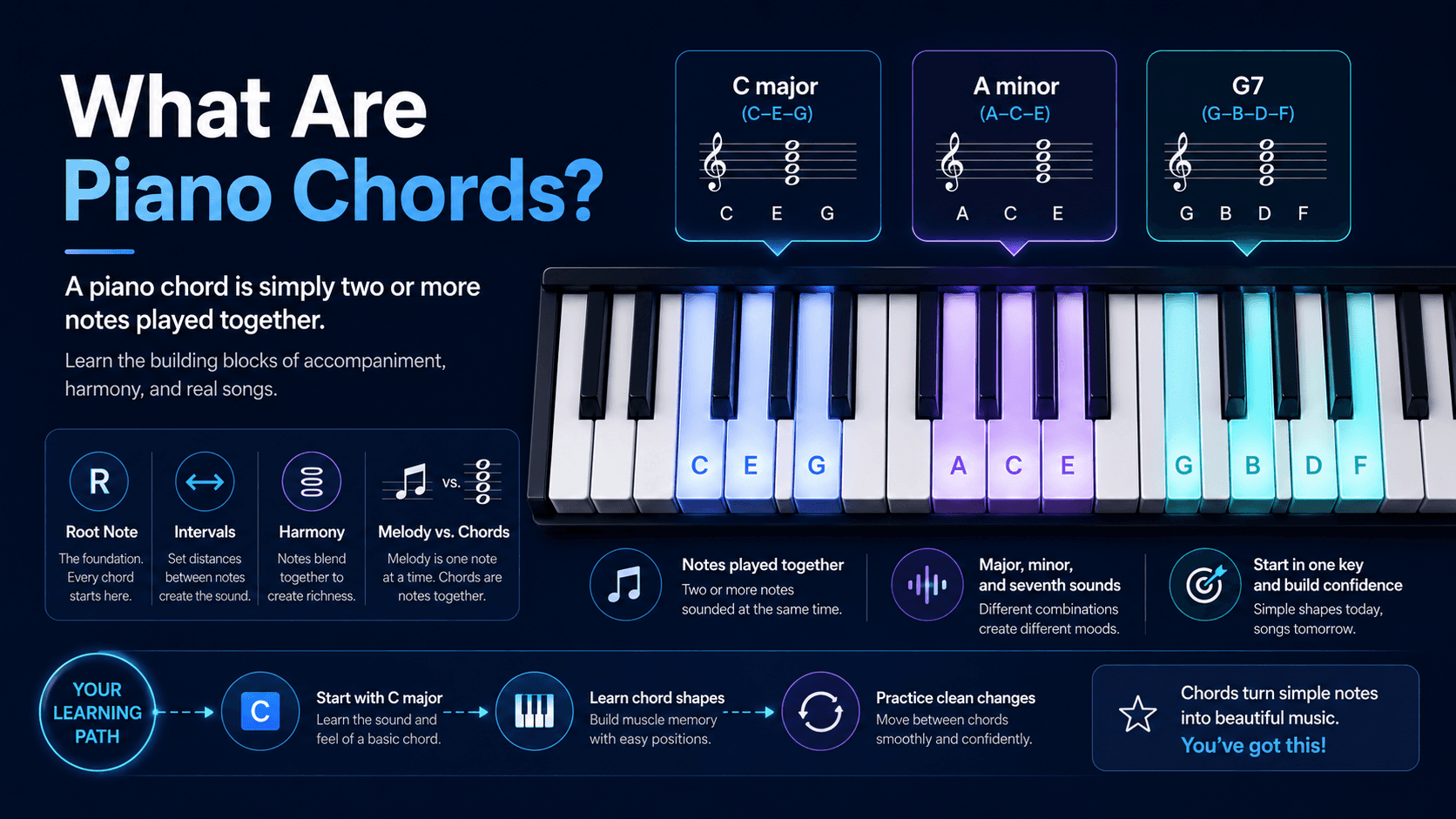
A chord is a group of notes played at the same time. On piano, that usually means pressing two or more keys together with one or both hands. The simplest chords use three notes; more advanced chords add a fourth, fifth, or even more tones.
Chords have names that tell you which notes to play. C major means a major chord built on C. Am means A minor. G7 means a G dominant seventh chord. Those symbols appear on chord charts, lead sheets, and song tutorials everywhere.
You do not need to read traditional sheet music to learn chords. Many players start with chord names and finger shapes, then add notation later if they want. That chord-first path is exactly what Looty Chords is designed for.
How Notes Combine to Form Chords
Every chord starts with a root note—the foundation. For C major, C is the root. Other notes stack on top at specific distances called intervals. A basic major chord adds a major third and a perfect fifth above the root.
Change one interval and the whole character changes. Lower the third and a major chord becomes minor. Add a seventh above the fifth and you get a seventh chord with a different color. The root stays the same; the formula defines the sound.
Use the interactive Chords tool to see this in action. Pick a root and chord type, and the keyboard highlights exactly which keys belong. Note names and interval labels appear so you can connect theory to what your fingers play.
Why Chords Are So Useful for Beginners
Chords let you play something musical quickly. Instead of learning to read every note on a staff, you learn a handful of shapes and start accompanying songs within days or weeks—not months.
Most popular songs use a small set of chord patterns. Learn those shapes in one key and you can already play dozens of tunes. Chord charts show you which symbol to play and when to change—no advanced theory required.
If you are wondering whether chord practice is worth your time, read our Why Learn Piano Chords guide. It explains how chords help you play songs faster, understand keys, and structure your practice.
Common Chord Types You Will Encounter
Beginners usually start with major and minor triads—the bright, stable major sound and the darker minor sound. From there, seventh chords, suspended chords, and other types add color as you encounter them in real music.
Looty Chords focuses on seven essential chord types per key: the shapes that appear most often in popular music. You do not need to learn every possible chord on day one—master the essentials first.
As you progress, the Seventh Chords guide covers the added-note chords you hear in jazz, R&B, and modern pop. Start with triads, then layer on sevenths when you are ready.
Chords vs. Melody on Piano
Melody is the tune you sing—the single-note line that stands out. Chords are the harmony underneath that supports the melody. In many piano arrangements, your left hand plays chords while your right hand plays melody or adds rhythmic fills.
Even if you only play chords for now, you are learning the harmonic language of music. That foundation makes melody, improvisation, and full arrangements much easier later.
Chord practice also trains both hands to coordinate. Your fingers learn to land on the right keys together, on time—a skill that transfers directly to playing from chord charts and lead sheets.
Where to Start Learning Chords
Pick one key to begin—C major is a common choice because many beginner songs use white-key chords. Learn the essential shapes in that key until changes feel comfortable, then expand.
Our Chords in All 12 Keys guide explains how to work through every tonal center one at a time. Looty Chords randomizes chord prompts with a metronome so you build real muscle memory—not just shape recognition.
When you are ready to drill changes, open Practice Mode and work at a tempo that keeps every shape clean. Short daily sessions beat occasional long ones.
Explore chords and start practicing
Use the interactive reference to see how any chord is built, then move into timed practice to build the reflexes you need for real songs.