
Piano chords for beginners are about learning a small set of shapes, understanding what they sound like, and practicing changes in time. You do not need to read sheet music or memorize eighty-four finger positions on day one. Start with one key, build confidence, and expand from there. Looty Chords is built for exactly that path.
What Beginners Actually Need to Know
Beginners need three things: chord names, finger shapes, and timing. A chord name like C or Am tells you which shape to play. Your fingers learn where those keys are on the keyboard. A metronome teaches you to change chords on the beat.
You do not need advanced theory on day one. You can learn that C major sounds bright and A minor sounds darker without studying interval formulas first. Theory helps later; shapes and sound come first.
For a clear definition of what chords are, read What Are Piano Chords?. For why chord practice matters, see our Why Learn Piano Chords guide.
How Chords Are Built (The Short Version)
Every chord has a root note—the starting pitch. Major chords stack a major third and fifth on top. Minor chords use a lowered third for a darker sound. That pattern repeats in every key.
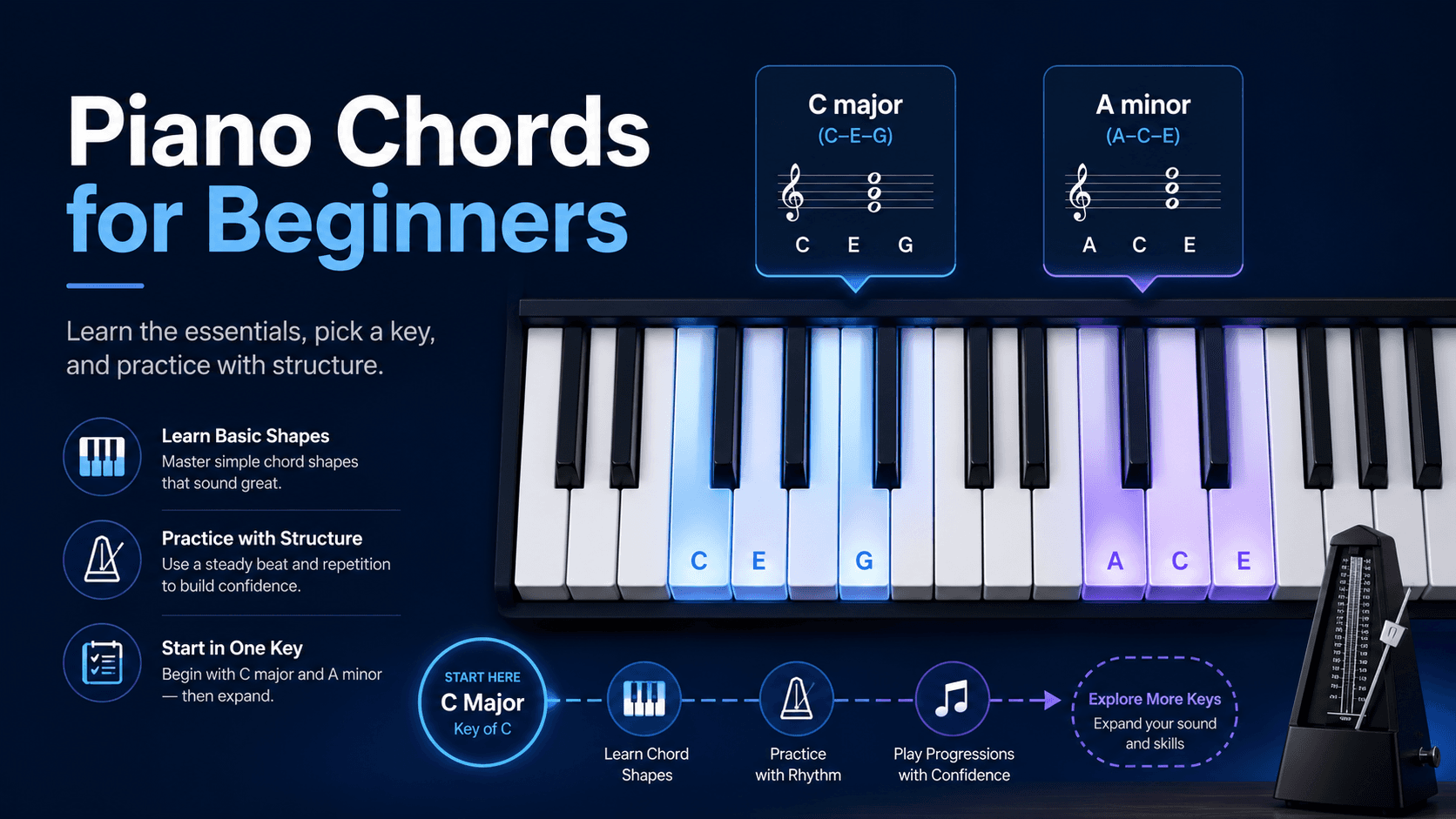
On piano, a C major chord is C, E, and G. An A minor chord is A, C, and E. The finger positions change with each root, but the major/minor relationship stays the same.
The How Piano Chords Work guide explains roots, intervals, and triads in more depth when you are ready. The interactive Chords tool shows any shape on a visual keyboard instantly.
Why Chords Matter for Beginners
Chords are how most songs are accompanied. Chord charts—symbols written above lyrics—let you play real music without reading every note on a staff. Learn a handful of shapes and you can follow along with countless tunes.
Chord practice also trains both hands. Your left hand holds harmony while your right hand can add melody later. That coordination is one of the biggest leaps from beginner to confident player.
Structured chord practice gives every session a clear goal. You are not wondering what to work on—you play the prompted shape, then the next one, on tempo.
Where Beginners Should Start
Most beginners start in the key of C because many songs use simple white-key chords there. Looty Chords lets you choose any key for your trial, but one familiar key keeps progress clear.
In each key you practice seven essential chord types—the shapes that appear most often in popular music. Master those in one key before jumping to the next.
Our Chords in All 12 Keys guide walks through the full roadmap for learning every tonal center one at a time.
How Beginners Should Practice
Short daily sessions work better than occasional marathons. Fifteen to thirty minutes with a metronome is enough to build steady progress when you practice most days of the week.
Use random chord order. Drilling chords alphabetically teaches sequence memory, not true shape recognition. Random prompts build the reflexes you need in real songs.
Slow down when changes feel sloppy. Accuracy before speed—every time. If you miss beats, lower the tempo and rebuild clean changes before speeding up.
Open Practice Mode when you are ready to drill. Looty Chords randomizes prompts and tracks your key so you always know what to work on next.
Common Beginner Mistakes to Avoid
Jumping across too many keys before the first key feels easy. Finish one key, then add the next.
Only watching chord diagrams without playing. Chords live in the hands—use a MIDI keyboard with Looty Chords when you can.
Ignoring tempo. Timing habits form early. Practice with a metronome from the start, even at a slow speed.
Skipping seventh chords too long. Triads come first, but sevenths appear in most modern music. Read the Seventh Chords guide when you are ready for the next step.
Your Next Steps as a Beginner
Start with Major Piano Chords Explained and Minor Piano Chords Explained to deepen your understanding of the two most common chord types.
Use the interactive Chords tool to explore shapes visually, then Practice Mode to drill changes in time. Consistent practice—even a few weeks in one key—builds real confidence.
Start your beginner chord journey
Explore chord shapes on the interactive reference, then practice with timing to build the skills you need for real songs.