
This is a practice page for one progression, not a definition of every progression. The numerals I, V, vi, and IV name four chords inside a major key. Pick a key below, look at each shape, and press a chord when you want to hear it. Nothing plays until you ask.
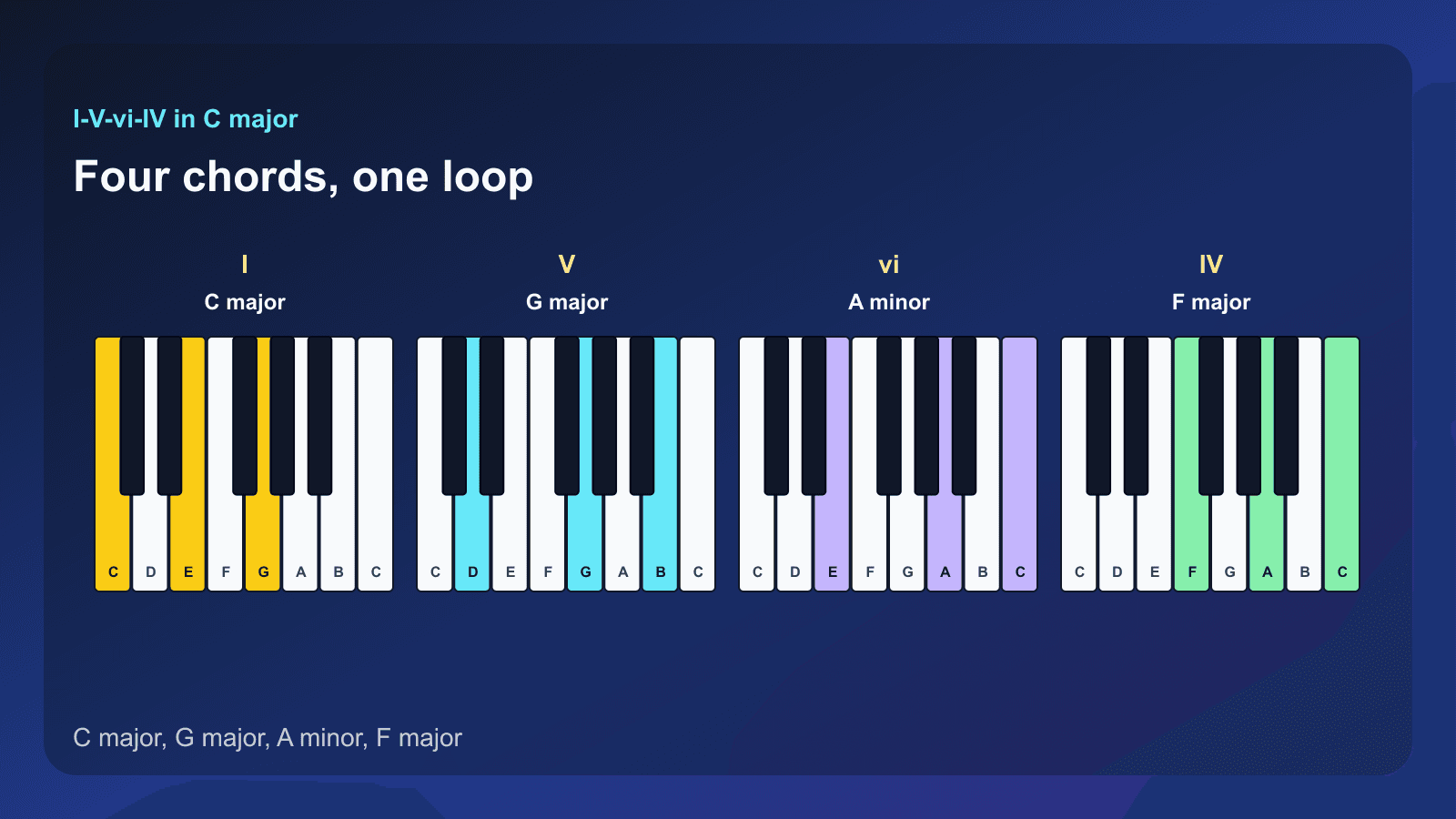
I – V – vi – IV
- I first inversion: C/E (E G C)
- V first inversion: G/B (B D G)
- vi first inversion: Am/C (C E A)
- IV first inversion: F/A (A C F)
What I, V, vi, and IV mean
A Roman numeral counts up the scale of the key you are in. I is the first chord, IV is the fourth, and V is the fifth. In a major key the capital numerals I, IV, and V are major chords. The lowercase vi is the sixth chord, and it is minor.
In C major the engine spells that loop as C major, G major, A minor, and F major. The notes are C E G, then G B D, then A C E, then F A C.
The chord progression guide explains what a progression is. This page is the drill: learn this loop, then move it.
The same numerals in G major
Changing the key does not change the numerals. I–V–vi–IV in G major is G major, D major, E minor, and C major. The notes are G B D, then D F# A, then E G B, then C E G.
Use the key buttons on the panel to hear that change. The Progression Trainer and the Roman Numeral Converter use the same kind of calculation, so the chord names stay tied to the key you select.
Closer inversions
Root position is a clear place to start. A first inversion keeps the same three notes and puts the third in the bass, so the hand does not jump as far. In C major the chord model’s first inversions of this loop are C/E, G/B, Am/C, and F/A.
The panel lists those shapes under the root-position chords. Open Chord Inversions when you want to compare every inversion of one chord. The smooth chord-change guide is the longer lesson on why a closer bass helps.
Practice it slowly
Play one chord per bar. Count four beats out loud before you change. If a change is late, stay at that tempo until the next chord arrives on beat 1. Then move the metronome up a little.
The metronome keeps the pulse. Go Practice is where the same chords can run with the count-in. The Circle of Fifths shows which key you moved to, and the beginner progression guide is the next reading if you want more than this one loop.
Start practicing piano chords with Looty Chords
Begin your free trial, compare plans, or read answers to common questions about chord practice and MIDI setup.