
This guide covers the Looty Chords beginner path: choose one key, learn seven essential shapes with on-screen diagrams, and practice timed changes during your free trial. If you want a broader introduction to chord basics, practice habits, and next steps, start with the comprehensive beginner guide linked in the first section.
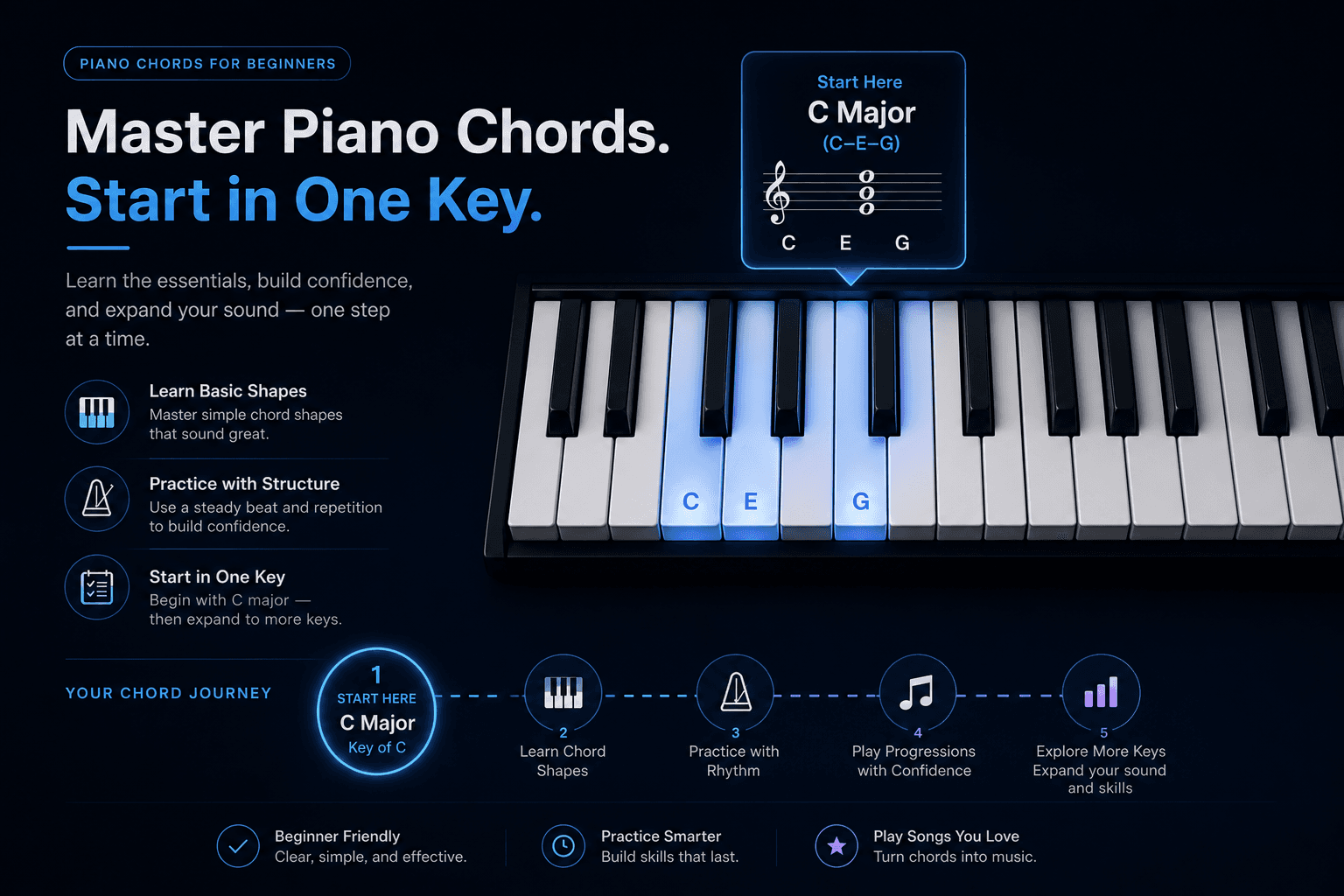
Where Beginners Should Start
Most beginners begin in the key of C because many songs use simple chords there and the white-key shapes feel approachable. Looty Chords lets you choose any key for your trial, but starting in one familiar key keeps progress clear.
For a wider beginner overview—including chord basics, practice habits, and what to learn next—read Piano Chords for Beginners.
In each key you practice seven essential chord types: major, minor, and five other common shapes used in popular music. You do not need to learn all twelve keys on day one—master one key first.
Looty Chords shows chord diagrams on screen so you always know which shape to play. You are not tested on reading staff notation; you learn chords as visual, named patterns.
How Beginners Should Practice
Short daily sessions work better than occasional long ones. Fifteen to thirty minutes with Looty Chords is enough to build steady progress when you practice most days of the week.
Use the metronome from the start—even at a slow tempo. Timing habits form early, and slow steady practice is more valuable than fast sloppy changes.
Let the app randomize chord order. Beginners often drill chords alphabetically; random prompts teach each shape on its own so your fingers respond in real songs later.
Common Beginner Mistakes to Avoid
Jumping across too many keys before the first key feels easy. Finish one key, then add the next.
Ignoring tempo. If every change is late, slow the metronome down and rebuild accuracy before speeding up.
Only watching diagrams without playing. Chords live in the hands—use a MIDI keyboard with Looty Chords when you can so practice happens on real keys.
How Looty Chords Helps Beginners
- 7-day free trial with full access to learn all chords in one key of your choice.
- On-screen chord diagrams and names for every prompt.
- Built-in metronome for timed practice.
- Random chord sequences to build real muscle memory.
- Optional USB MIDI keyboard support for practice on your piano.
When one key feels comfortable—usually within a few weeks of consistent practice—you can unlock more keys and work toward playing songs in any key you want.
Start your beginner chord path
Explore chord shapes on the interactive keyboard, then practice your first key in Looty Chords with timed drills.