
A beginner should start with three or four chords in a single key, not all seven diatonic chords at once. In C major, that usually means C, F, G, and Am—the four chords that carry most beginner songs. Learning a small starter set first, then expanding, keeps early practice focused and lets you play something musical almost immediately instead of feeling buried in shapes before you have played a single song.
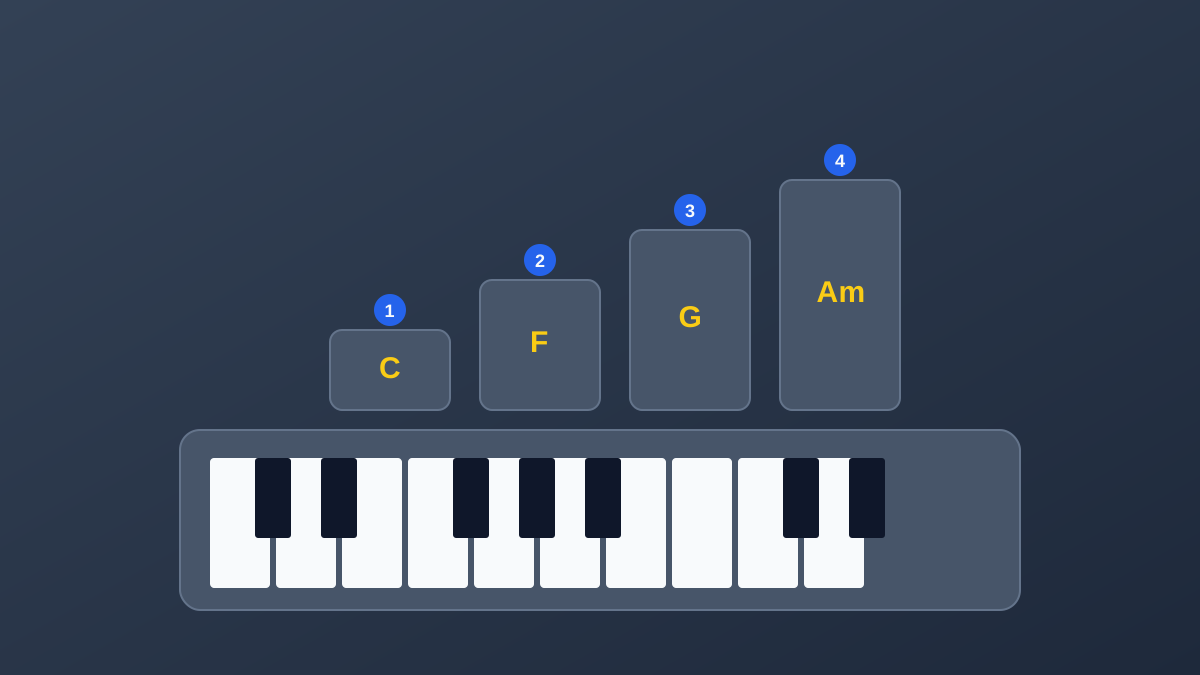
The Starter Set: Four Chords in One Key
In the key of C major, the I, IV, V, and vi chords—C, F, G, and Am—cover an outsized share of common progressions. These four roles (home chord, subdominant, dominant, relative minor) repeat across countless songs, so mastering just this set gives you real playing ability before you have learned every chord in the key.
For a deeper look at why these four specifically carry so much weight, see Common Piano Chords Every Beginner Should Know.
Why Not Learn All Seven Diatonic Chords at Once
A major key technically has seven diatonic triads (I through vii°), but trying to learn all seven with equal focus from day one spreads your practice thin. The vii° diminished chord, in particular, appears far less often in beginner-level music than the other six—prioritizing it early is rarely worth the practice time it costs.
Learning fewer chords deeply beats learning more chords shallowly. Four chords you can play instantly, on tempo, in any order, are more useful than seven chords you can only find by searching.
What to Add Once the Starter Set Feels Solid
- The remaining diatonic triads in your key—typically Dm and Em in C major—to round out the full seven.
- The dominant seventh chord (G7 in C) once major and minor triads feel automatic.
- The same four-chord pattern in a second key, like G major or F major, to start building range.
- Basic inversions of your starter chords, which make transitions smoother and open up new voicings.
This Is About Order, Not How Many You Ultimately Need
This guide is about sequencing—what to practice first so early sessions feel productive, not overwhelming. It is a different question from how many chords unlock how much of the songbook overall.
For that repertoire-focused angle—how far a small chord vocabulary actually stretches across real songs—see How Many Piano Chords Do You Need to Know to Play Songs?.
How to Practice the Starter Set
Drill the four chords in random order, not in a fixed sequence—random prompts build true shape recognition instead of memorized order. Use a metronome from the start, even at a slow tempo, so timing habits form alongside the shapes themselves.
Open Practice Mode, select your key, and Looty Chords will cycle through the essential chord types with randomized prompts and a built-in metronome.
Master four chords before chasing all seven
Start with C, F, G, and Am in the key of C (or the equivalent four in your chosen key), then expand once changes feel automatic.