
You do not memorize twelve unrelated scales. You start on the tonic and walk whole, whole, half, whole, whole, whole, half. The selector uses the same twelve major keys as the circle of fifths.
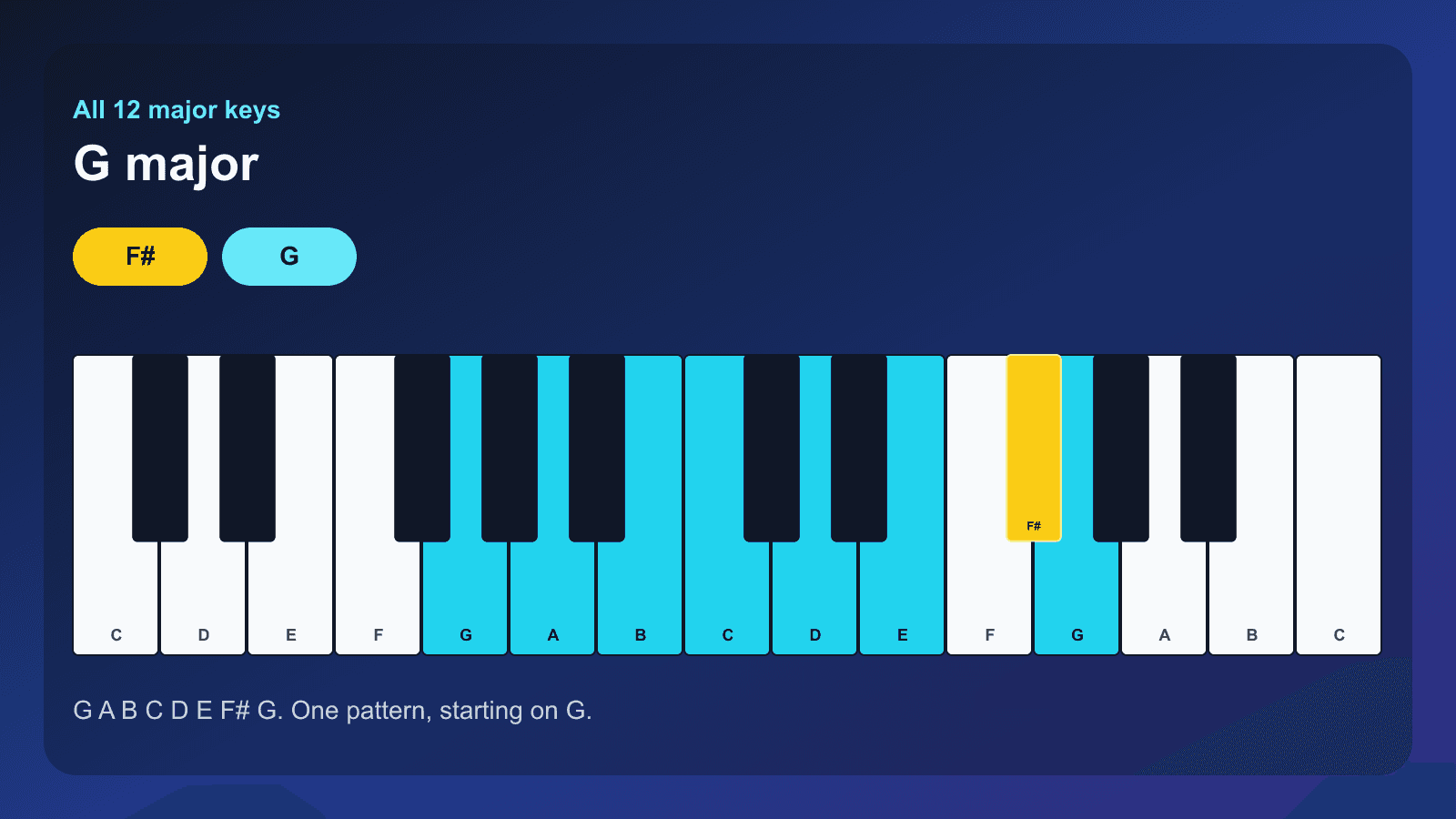
Major scale spelling
The notes and the highlighted keys come from the scale engine for the key you select.
C D E F G A B C
One pattern, twelve starting notes
Choose G and the spelling includes F♯, because the half step between degrees 7 and 8 has to land on G. Choose F and the spelling includes B♭, because the half step between degrees 3 and 4 has to land on A after a whole step from B♭. The demo shows the spelling for the key you select. It does not keep a handwritten list beside the engine.
F♯ is the sharp spelling used on the circle for that key. The page does not silently rename it G♭.
Hear the scale before you speed it up
Use Hear Scale at a pace where you can name each note. The button plays the eight notes and then stops. It does not start a practice timer or a metronome session.
If a note surprises you, check the half steps, not the letter you wish were natural.
The circle is the map of these keys
Each clockwise step on the Circle of Fifths adds one sharp to the signature. Each step the other way adds one flat. The scale spelling and the signature count are the same fact written two ways.
Reading sharps and flats is the staff version of this selector.
Start practicing piano chords with Looty Chords
Begin your free trial, compare plans, or read answers to common questions about chord practice and MIDI setup.