
You do not need a separate rule for every key. Sharps always enter in the same order, and flats always enter in the opposite order. Count the accidentals, then apply the shortcut.
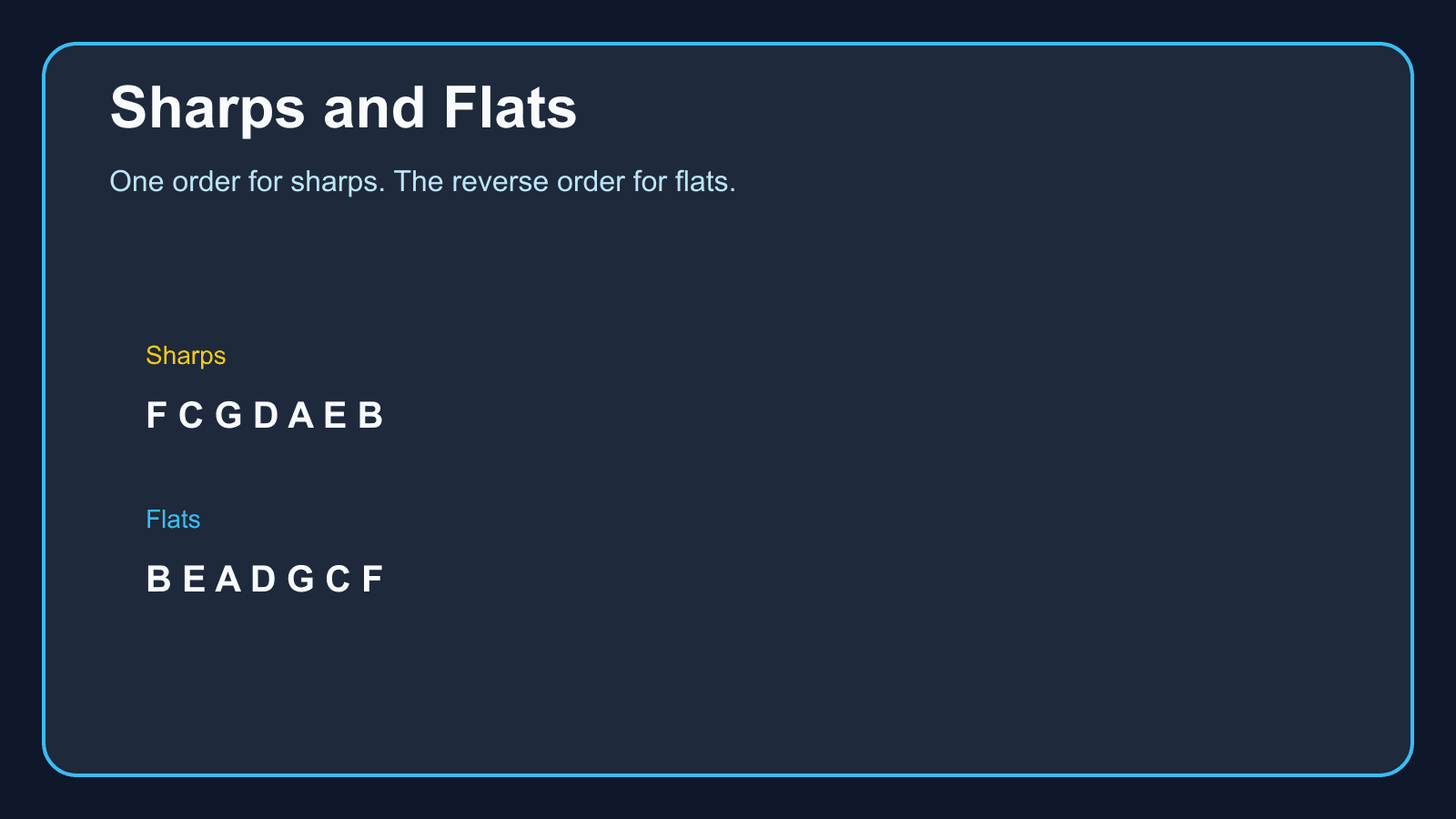
The order never changes
Sharps: F, C, G, D, A, E, B.
Flats: B, E, A, D, G, C, F.
One sharp is F♯, and that signature is G major. One flat is B♭, and that signature is F major.
The flat order
Flats are written B, E, A, D, G, C, F. That is the sharp order backwards. One flat is B♭, which is F major. Two flats are B♭ and E♭, which is B♭ major. From two flats onward, the second-to-last flat names the major key.
F major is the exception to that second-to-last shortcut, because a one-flat signature has no second-to-last flat. Remember that single case, then use the shortcut for the rest.
Check yourself on the circle
The Circle of Fifths agrees with this order. Clockwise keys accumulate sharps. Counter-clockwise keys accumulate flats. If your count and the tool disagree, recount before you change the music.
This page is about reading the accidentals. It does not teach you how to pick a comfortable piano key. That choice is the next lesson.
Start practicing piano chords with Looty Chords
Begin your free trial, compare plans, or read answers to common questions about chord practice and MIDI setup.