
A scale is a ladder of notes from a home note back to the same note an octave higher. The major scale is the ladder whose pattern of whole steps and half steps sounds like the usual “do re mi.”
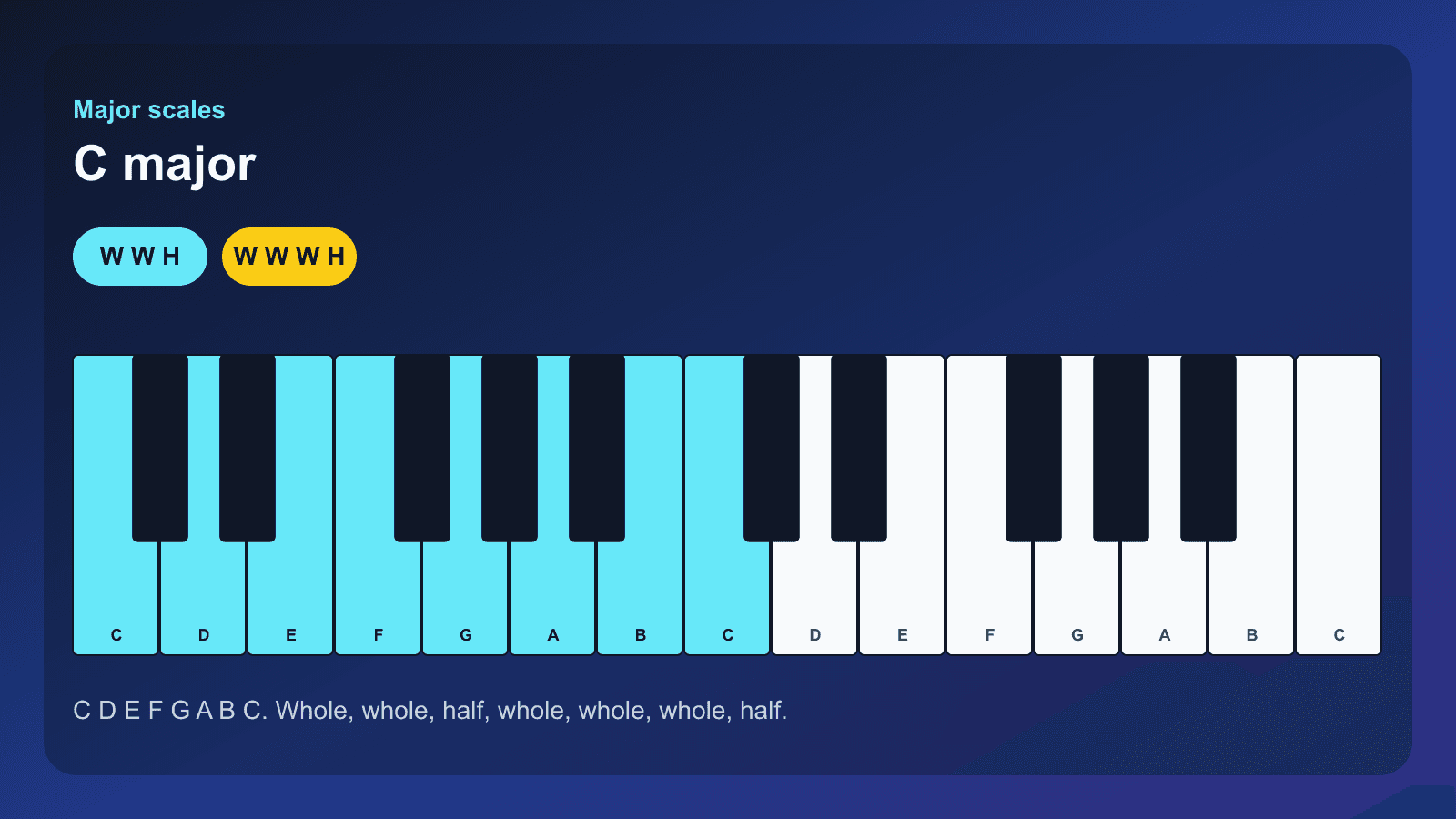
Major scale spelling
The notes and the highlighted keys come from the scale engine for the key you select.
C D E F G A B C
Seven different notes, then the octave
C major, read from the scale engine, is C, D, E, F, G, A, B, and then C again. Those are seven letter names. The second C is the octave, the same note name twelve half steps higher. It is the end of the ladder, not an eighth new letter.
The demo plays that spelling. If you change the key, the letters stay in order and the accidentals change. You do not skip a letter to avoid a sharp or a flat.
Where the half steps sit
From C the moves are whole, whole, half, whole, whole, whole, half. The half steps are E–F and B–C, the same two white-key pairs as the half-step lesson. In any other major key those half steps still sit between degrees 3–4 and 7–8. The accidentals move so the pattern stays put.
C major is the easy reading example because it needs no sharps or flats. It is not a different pattern from G major or F major.
What the scale is for
The key signature is a short way to write this pattern. The chords of the key are triads built on each of these seven notes. The scale does not play those chords for you. It tells you which notes belong.
Scale degrees and the chords they create is the next page. Key signatures is the written form of the same pattern.
Start practicing piano chords with Looty Chords
Begin your free trial, compare plans, or read answers to common questions about chord practice and MIDI setup.