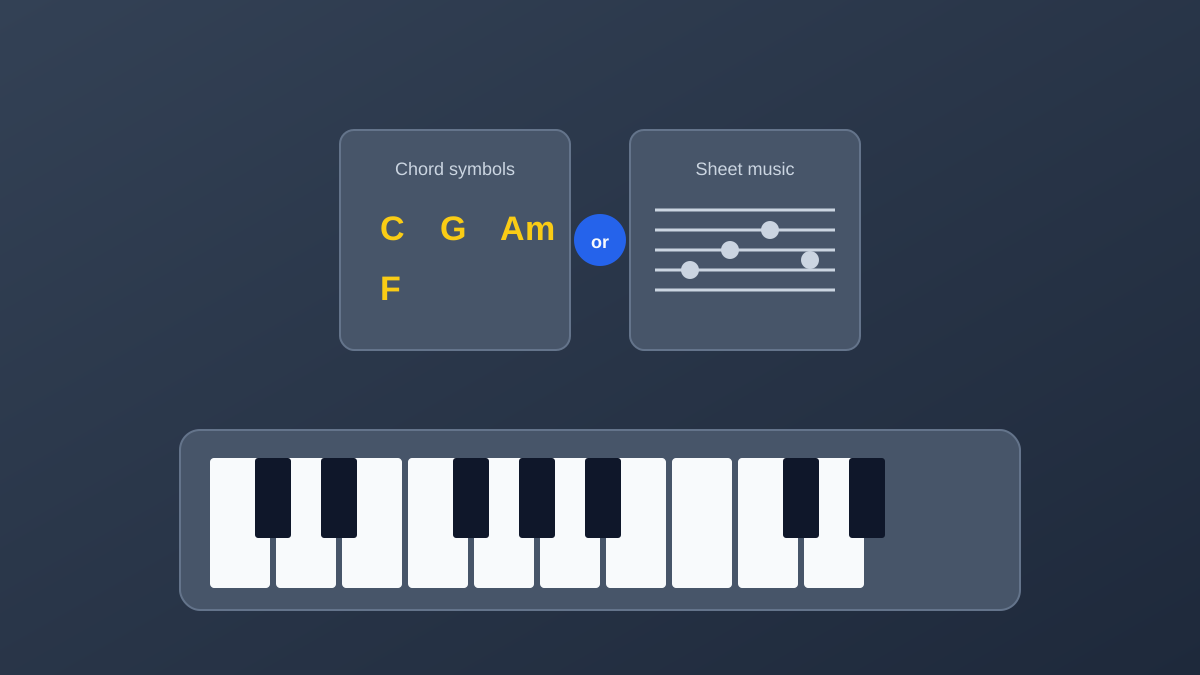
Yes—you can learn piano without ever reading traditional sheet music, by learning chord symbols and chord charts instead. This is not a lesser or incomplete way to play; it is how countless working musicians, from gospel and worship players to gigging singer-songwriters, actually learn and perform. Traditional notation is a valuable skill with its own strengths, but it is a choice, not a requirement, for learning piano.
What Chord-Based Learning Actually Covers
Chord symbols—letters like C, Am, G7, and Fmaj7 written above lyrics or a melody line—tell you exactly what to play without needing to read individual notes on a staff. Learn to recognize chord shapes and follow a chart, and you can accompany singers, play along with recordings, and perform a huge range of popular music.
For what a chord actually is and how this system works, see What Are Piano Chords? and Piano Chord Symbols.
Why This Path Works for So Many Players
Chord charts and lead sheets are the standard notation format in gospel, worship, folk, jazz combos, and most gigging pop and rock settings—reading traditional notation fluently is not assumed in these contexts. Musicians in these styles routinely learn entire setlists from chord charts alone, adding their own voicings, rhythm, and feel.
For a full beginner roadmap built around this approach, see Piano Chords for Beginners.
What Traditional Notation Adds, If You Want It Later
- Exact melodies and precise rhythms, note for note, as a composer wrote them.
- Access to classical repertoire, which is almost always notated rather than chord-charted.
- Precise dynamics and articulation markings—exactly how loud, soft, or detached a passage should be.
- The ability to sight-read unfamiliar written music in ensembles that expect it.
Chords and Notation Are Not Mutually Exclusive
Starting with chords does not close the door on learning notation later—many players build strong chord fluency first, then add notation reading once they have a reason to (classical repertoire, ensemble playing, or simply curiosity). Learning in this order often makes notation easier to pick up, since you already understand harmony and keyboard geography.
There is no rule that one has to come before the other, and no penalty for choosing chords first if that is what gets you playing real music sooner.
How This Approach Works in Practice
Looty Chords is built entirely around chord-first learning: you see chord names and shapes on screen, not a musical staff, and practice moving between them with a metronome. This mirrors how chord-chart musicians actually learn and perform, rather than treating notation as a prerequisite.
Open Practice Mode to start building chord fluency directly, no notation required.
Start with chords—no sheet music required
Learn chord shapes and symbols, build changes with a metronome, and start playing real music. Add notation later only if and when you want it.