
A chord pattern is a short loop of chords, named with Roman numerals so you can move it to another key. A full progression lesson explains why chords follow each other. This page is the repetition: pick the I–IV–V pattern, choose a key, and hear one chord at a time.
I – IV – V
A pattern is a loop you can move
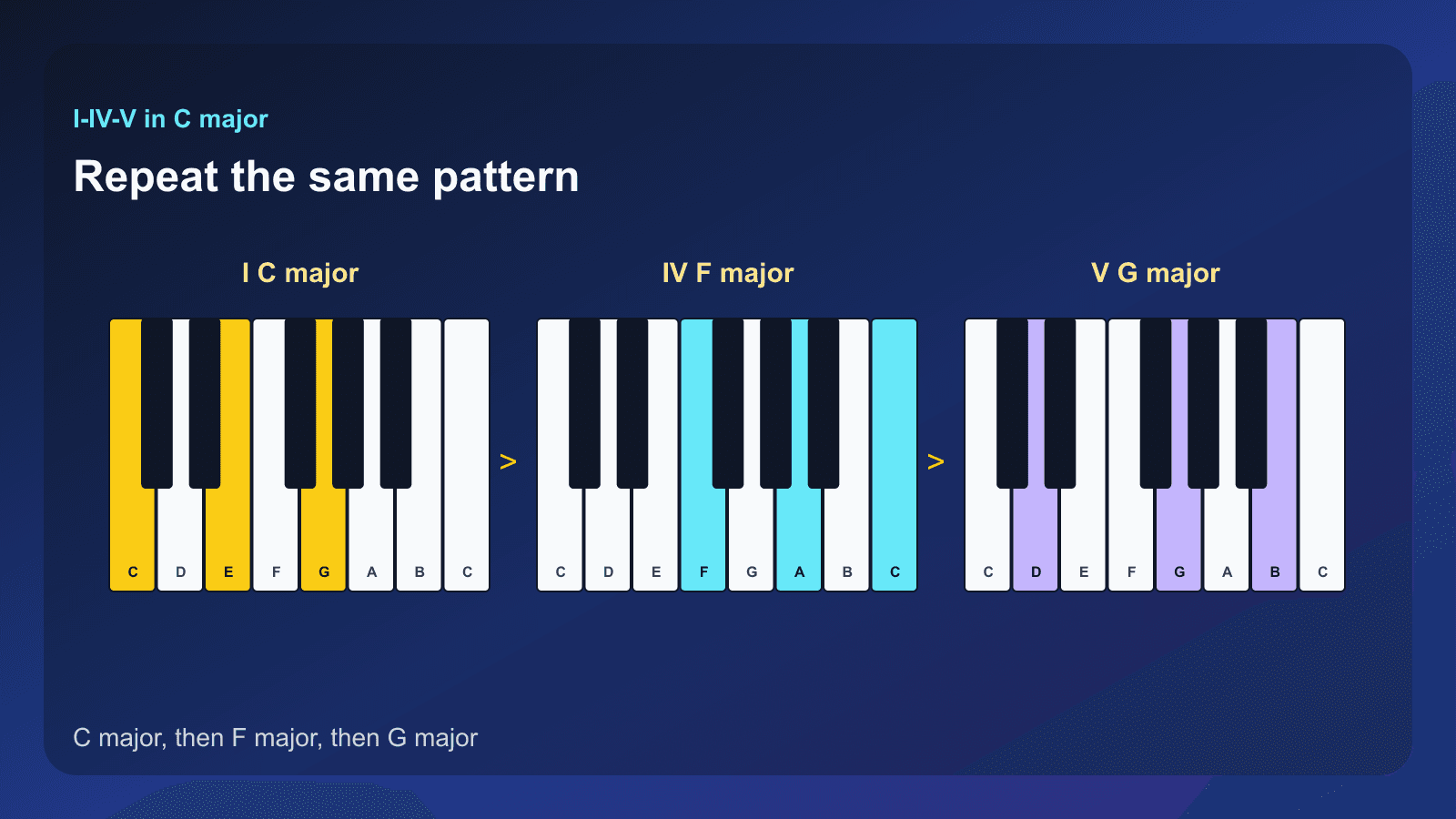
I–IV–V means the first, fourth, and fifth chords of the key. In C major those chords are C major, F major, and G major. The notes are C E G, then F A C, then G B D. You play that loop until the changes feel familiar.
The numerals stay the same when the key changes. In G major, I–IV–V is G major, C major, and D major. The pattern panel’s key buttons use the keys the trainer offers beginners, and each button rebuilds the chords from the pattern engine.
Slow changes, then a closer shape
Change chords on a counted beat. If the hand arrives late, the tempo is too fast for today. Stay with one loop until every chord lands together.
After the root-position shapes are reliable, try a first inversion so the bass note sits closer to the next chord. Chord Inversions shows those shapes for major and minor triads. This pattern page does not invent finger numbers.
Keep the metronome slow while you do it. How to practice chord changes is the companion for the motion between two chords. The Progression Trainer is the longer sequence, and the Roman Numeral Converter shows the numeral as a chord name in the key you choose.
Start practicing piano chords with Looty Chords
Begin your free trial, compare plans, or read answers to common questions about chord practice and MIDI setup.