
This page is not another definition of the word chord. It is the measurement. Once you can name a third, you can explain why two chords with the same root are not the same chord.
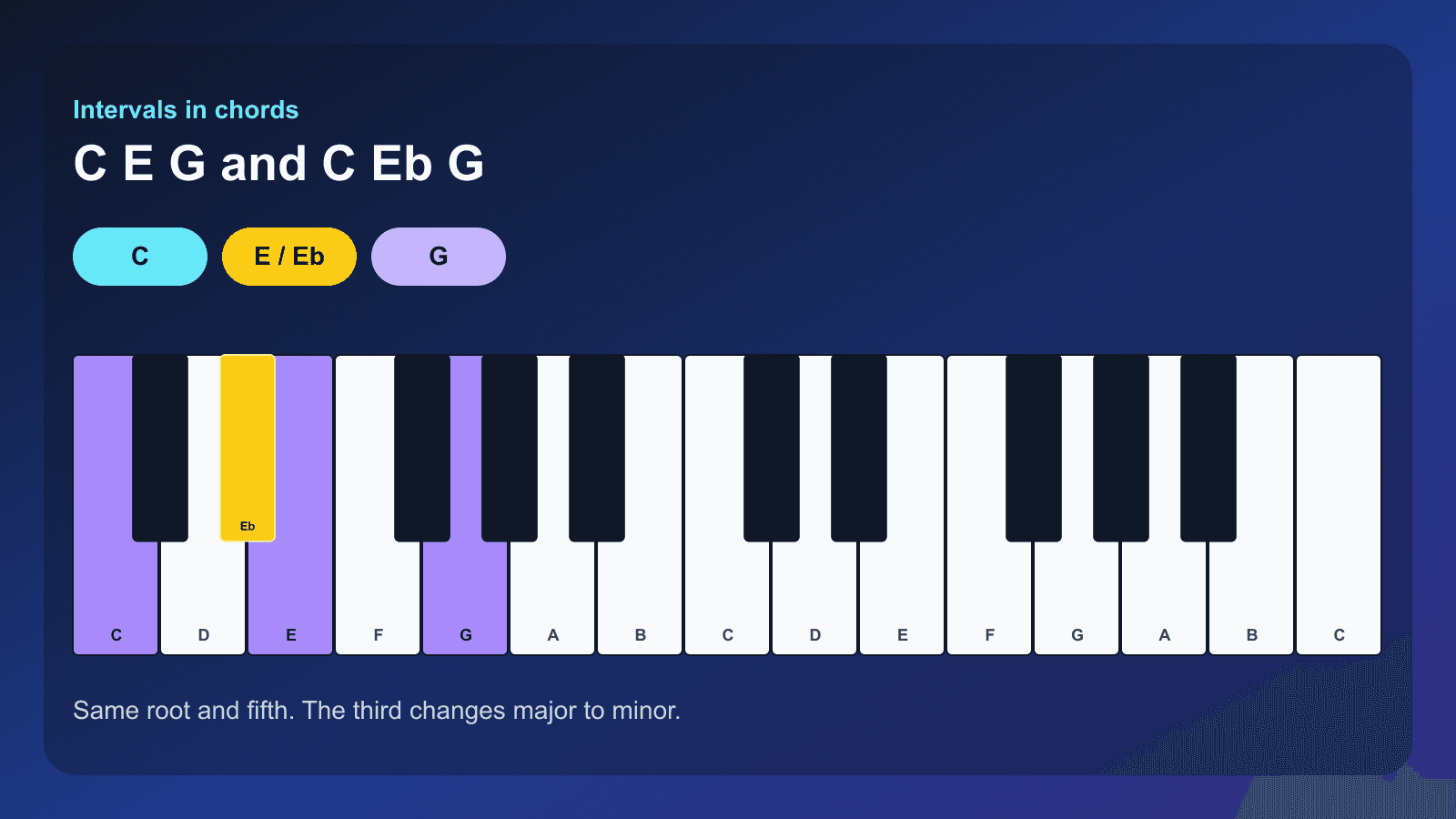
C major and C minor from the chord model
C E G
C Eb G
Two thirds, one on top of the other
A triad uses three notes. From the root, the next chord tone is a third. From that note, the top chord tone is another third. The outside interval, root to the fifth, is a perfect fifth in both the major and the minor triad.
The demo reads C major and C minor from the chord model and highlights those notes. Trust that spelling if it disagrees with a guess.
Changing the third changes the quality
Lower the major third by one half step and the major triad becomes minor. C, E, G becomes C, E♭, G. The root and the fifth stay. The chord name does not.
Raising the minor third does the reverse. You are not adding a new chord family. You are changing one interval.
Where to take the same notes
Chord Finder names a chord from the notes you select. Finding a chord from the notes is the walkthrough. Ear Training’s open exercise asks you to hear the quality this page measures.
Sevenths, suspended chords, and added tones are further intervals on top of this triad. They are not required to see why major and minor differ.
Start practicing piano chords with Looty Chords
Begin your free trial, compare plans, or read answers to common questions about chord practice and MIDI setup.