
Name two notes and you can ask how far apart they are. That distance is the interval. A melody moves by intervals one note at a time. A chord stacks intervals so they sound together.
A fifth you can hear
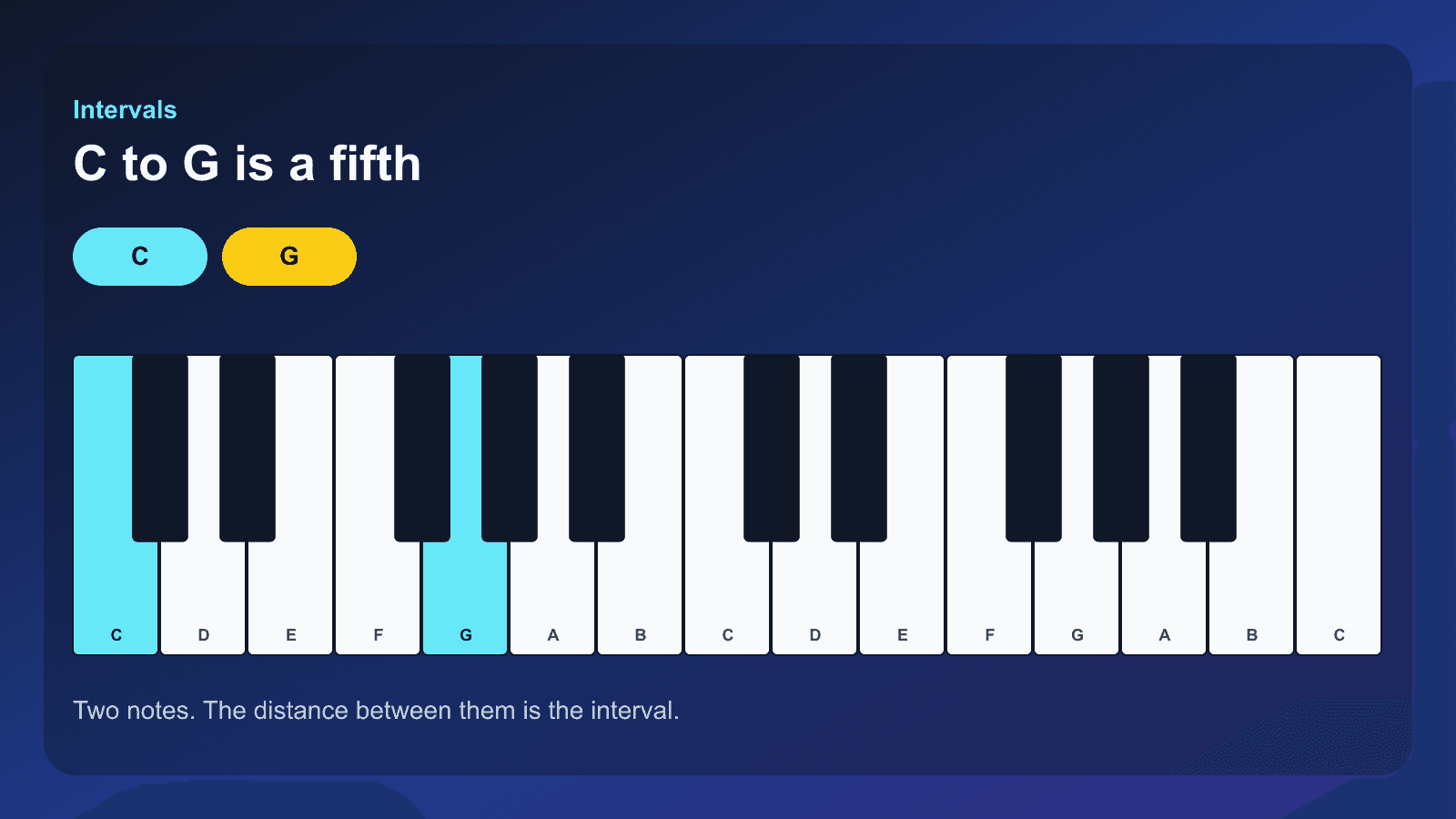
C and G, together. That is a harmonic fifth. The same two notes one after another are a melodic fifth.
Distance, not a note name
C to E is the same kind of distance as F to A: both are major thirds. The letter names change. The size of the step does not. Counting letters gives the interval’s family, such as a second, third, or fifth. Counting the keys between them tells you whether that family is major, minor, or perfect.
On the piano, the smallest move to the next key, white or black, is a half step. Two half steps make a whole step. Larger intervals are stacks of those.
Melodic and harmonic intervals
Play C and then G, one after the other, and you hear a melodic fifth. Play them at the same time and you hear a harmonic fifth. The distance is the same. Only the timing changes.
The keyboard on this page highlights C and G. Hear them together, then read the next lesson for the half steps that sit inside that fifth.
Why intervals come before chord names
A major triad is a major third with a minor third on top. A minor triad swaps those two thirds. A scale is a specific pattern of whole steps and half steps. If the interval is wrong, the chord name and the scale name are wrong with it.
How intervals build chords uses C major and C minor as the worked example. Ear Training asks a signed-out player to name major or minor by sound, which is that same third.
Start practicing piano chords with Looty Chords
Begin your free trial, compare plans, or read answers to common questions about chord practice and MIDI setup.