
Most beginners make solid progress with fifteen to thirty minutes of focused piano chord practice a day. That range is not an arbitrary number—it is long enough to include a warm-up, a real drill, and a musical finish, but short enough to stay focused the whole time. The right length for you specifically depends on your attention span, schedule, and what stage of practice you are in, not a single fixed rule.
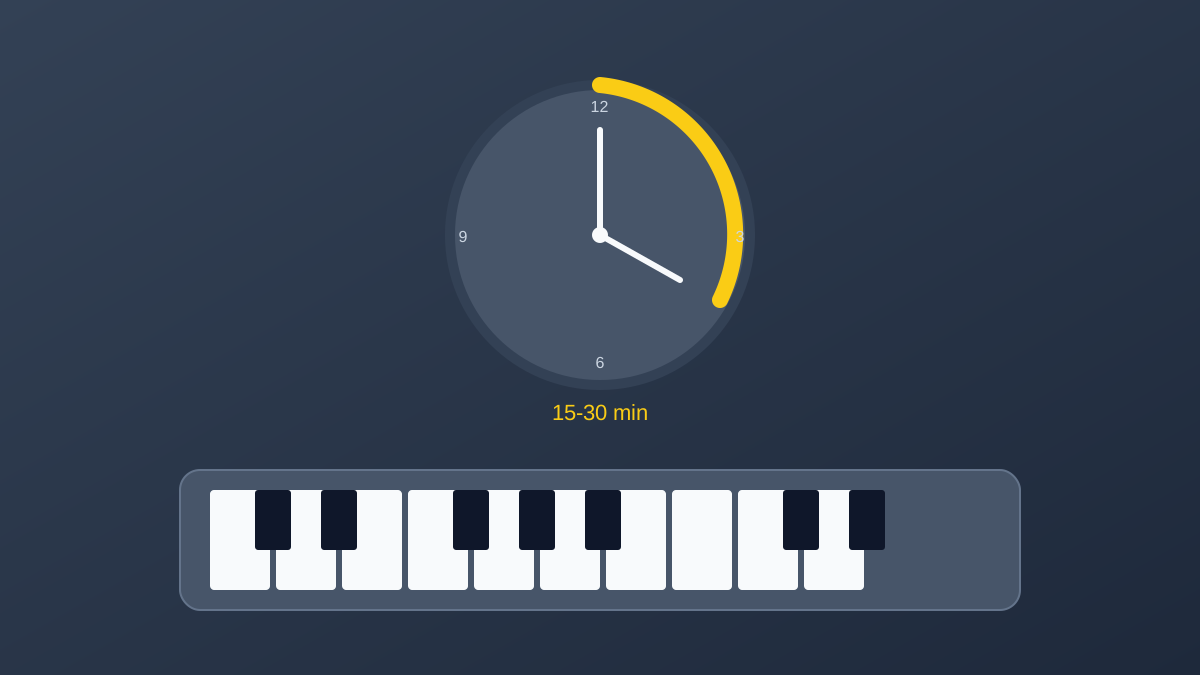
Why Fifteen to Thirty Minutes Works for Most Beginners
This range is long enough to warm up, drill chords with a metronome, and finish with something musical—without running so long that focus drops off. Motor learning depends more on consistency than on marathon sessions, so a sustainable daily length beats an ambitious one you cannot keep up.
For a full minute-by-minute breakdown at the low end of this range, see 15-Minute Piano Chord Practice Routine; for a more complete session structure, see Piano Chord Practice Routine.
What Actually Changes the Right Length for You
- Attention span—shorter, fully-focused sessions beat longer sessions with your mind wandering halfway through.
- Physical stamina—new players fatigue faster, especially without a break, which can lead to sloppy repetition.
- Schedule reality—a shorter session you can actually do every day beats a longer one you skip half the time.
- What you are working on—a single tricky transition might need only a few focused minutes, while building a full key from scratch benefits from more time.
- Whether you are including a warm-up and a musical cool-down, which add time without adding drilling intensity.
Quality of Focus Matters More Than the Clock
Ten minutes of genuinely focused, metronome-timed practice builds more skill than thirty distracted minutes of noodling. If you notice your attention drifting, it is usually better to stop and return later in the day than to keep playing on autopilot—unfocused repetition can even reinforce bad timing habits.
This is why there is no single "correct" number of minutes that applies to everyone equally. The goal is a length you can sustain with real attention, not a target you hit while only half paying attention.
When More Time Stops Helping
Beyond a certain point—often somewhere past thirty to forty-five minutes for a beginner—returns start to diminish. Fatigue sets in, accuracy drops, and frustration can build faster than skill. It is generally more effective to split a longer desired total into two shorter sessions than to push through one long one at declining focus.
This same principle shows up in the trade-off between daily consistency and single-session length—see What Happens If You Practice Piano Chords Every Day? for more on how daily practice compounds.
Starting Shorter and Building Up
If fifteen minutes already feels like a stretch, there is nothing wrong with starting at five or ten and building from there. A short session done consistently beats an ambitious session abandoned after a few days. Once a shorter routine feels easy to complete, extending the core drill by a few minutes at a time is a natural next step.
Open Practice Mode and set a length that fits your day—Looty Chords works whether you have five minutes or thirty.
Find a length you can actually sustain
Fifteen to thirty minutes is a solid target for most beginners, but a shorter session you complete daily beats a longer one you skip. Start where you are.