
Practicing piano chords every day builds faster recall, smoother chord changes, and stronger muscle memory than inconsistent practice does—because motor skills respond to regular, spaced repetition. That said, daily practice is not a guarantee of a specific timeline, and more is not always better: burnout, sloppy repetition, and unrealistic expectations can undercut the benefits if daily practice is not approached with some care.
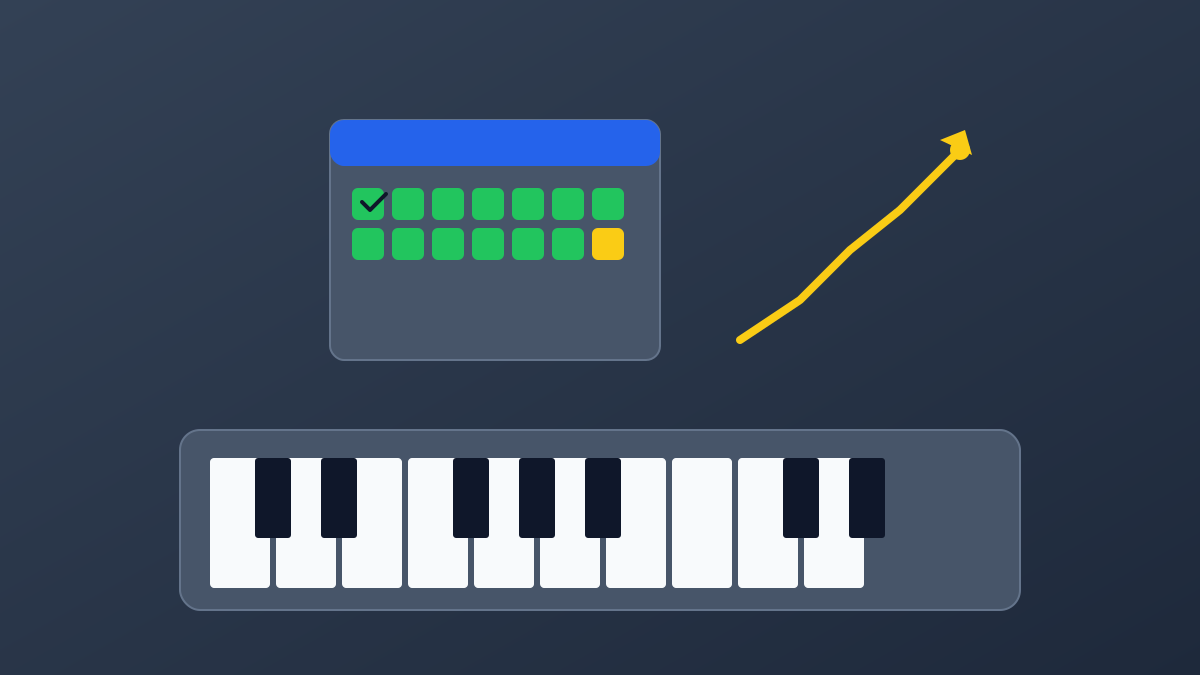
What Daily Practice Actually Builds
- Faster recall—your fingers find chord shapes with less conscious searching each day you reinforce them.
- Smoother transitions—the specific path between two chords becomes familiar, not just the chords themselves.
- Stronger muscle memory—daily repetition is what motor learning research consistently shows builds retention.
- Better timing—regular practice with a metronome trains your internal sense of pulse more reliably than occasional sessions.
Why Daily Practice Outperforms Occasional Marathons
Fifteen minutes a day, most days of the week, tends to build more lasting skill than one long session once a week—even if the total practice time is similar. Motor learning benefits from spaced repetition: your brain and hands consolidate a skill between sessions, so frequent, shorter exposure reinforces that consolidation better than infrequent, longer sessions.
For the flip side of this—what happens when practice becomes inconsistent—see What Happens If You Don't Practice Piano Chords Regularly?.
Daily Practice Is Not a Guaranteed Timeline
Practicing every day does not mean you will master a key in a fixed number of days, or that two people practicing daily will progress at the same rate. Prior experience, how you structure each session, and simple individual variation all affect the pace—daily consistency improves your odds, but it does not override them.
Be wary of any claim that a specific daily routine guarantees mastering all your chords by a certain date. Consistency is the biggest lever you control, but it is one factor among several, not a formula with a fixed output.
The Real Risk: Burnout and Diminishing Returns
More practice is not automatically better practice. Long daily sessions without rest can lead to physical fatigue, frustration, and eventually avoidance—the opposite of the consistency you are trying to build. Quality of attention matters more than raw minutes; a distracted hour teaches your fingers far less than a focused fifteen minutes.
If duration itself is the open question for you, How Long Should a Beginner Practice Piano Every Day? covers realistic session lengths for beginners.
How to Practice Daily Without Burning Out
Keep sessions short enough to sustain—fifteen to thirty minutes is plenty for most beginners. Use a metronome and randomized chord prompts instead of repeating the same familiar sequence, since that keeps sessions purposeful rather than autopilot repetition. If a specific day is missed, treat it as a normal gap, not a failure that resets your progress.
Open Practice Mode for structured, randomized daily drills, or follow the full session breakdown in Piano Chord Practice Routine.
Build a sustainable daily habit
Short, focused daily sessions build real chord fluency over time. Start today, and let consistency—not intensity—do the work.