
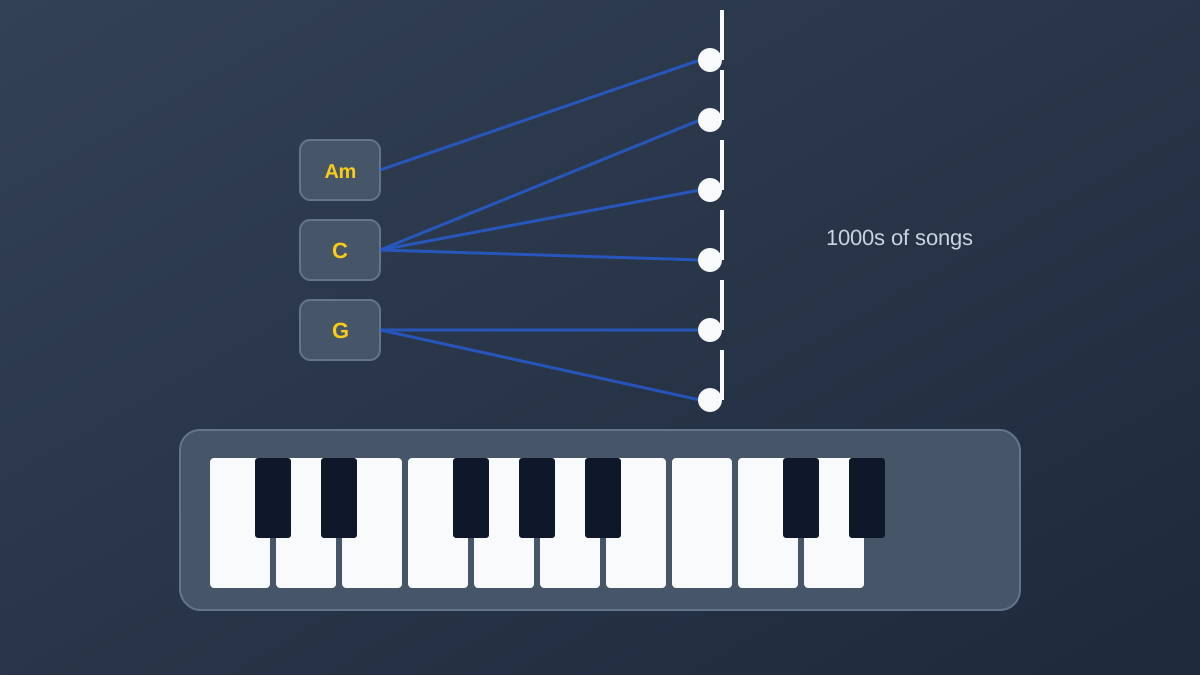
Four chords in one key—typically the I, V, vi, and IV, such as C, G, Am, and F in C major—are enough to play a genuinely large number of popular songs. This is not an exaggeration: those four chord roles repeat across huge amounts of pop, rock, folk, and worship music because they form one of the most common progressions in modern songwriting. Knowing more chords opens up more songs and more nuance, but four well-practiced chords already unlock a real, playable songbook.
The "Four Chords" Phenomenon Is Real
The I–V–vi–IV progression—and its close relatives, like vi–IV–I–V—shows up across an enormous range of songs, spanning decades and genres. It is popular precisely because it is versatile: those four chords support countless different melodies without needing to change.
This is not a Looty Chords-specific claim; it reflects how much of contemporary popular music is written. See Piano Chord Progressions for Beginners for how this and other common progressions actually work.
Why So Few Chords Cover So Much Ground
The I, IV, V, and vi chords fill the most common harmonic roles in a key: home, tension, resolution, and emotional contrast. Songwriters reuse these roles constantly because they sound stable and familiar to listeners, not because there is a shortage of other options. Once you recognize the pattern, you start hearing it everywhere—which makes learning new songs faster, not just playing the ones you already know.
For the full explanation of how these chord roles work in any key, see How Piano Chords Help You Play Songs.
When You Need More Than Four Chords
- Songs that use the remaining diatonic chords—ii, iii, or vii°—for more harmonic variety.
- Music with seventh chords or extensions, common in jazz, R&B, and more sophisticated pop.
- Songs that modulate to a different key partway through.
- Songs written in a style that leans on chords outside the basic diatonic set, like borrowed or chromatic chords.
Repertoire Size vs. Learning Order
This page is about how much repertoire a given number of chords unlocks. A related but different question is which chords to actually learn first as a beginner—the practical starting sequence, not the ceiling on what four chords can do.
For that sequencing question, see How Many Piano Chords Should a Beginner Learn First?.
Growing From Four Chords to a Full Songbook
Add the remaining diatonic triads in your key, then dominant seventh chords, then a second key—each addition expands your repertoire without requiring you to relearn what you already know. Progress compounds: once C, G, Am, and F feel automatic, adding Dm, Em, and G7 is a much smaller leap than the original four chords were.
Practice each new addition with randomized drills so it becomes as automatic as your starter set. Open Practice Mode to keep building from where you are.
Four chords is a real starting songbook
Master the I, IV, V, and vi chords in one key, then keep expanding. Explore the shapes visually, then build speed and timing in Practice Mode.