
A key signature saves you from writing the same accidental on every note. If a piece is in G major, the signature puts one sharp at the beginning, and every F is F♯ unless a later accidental cancels it.
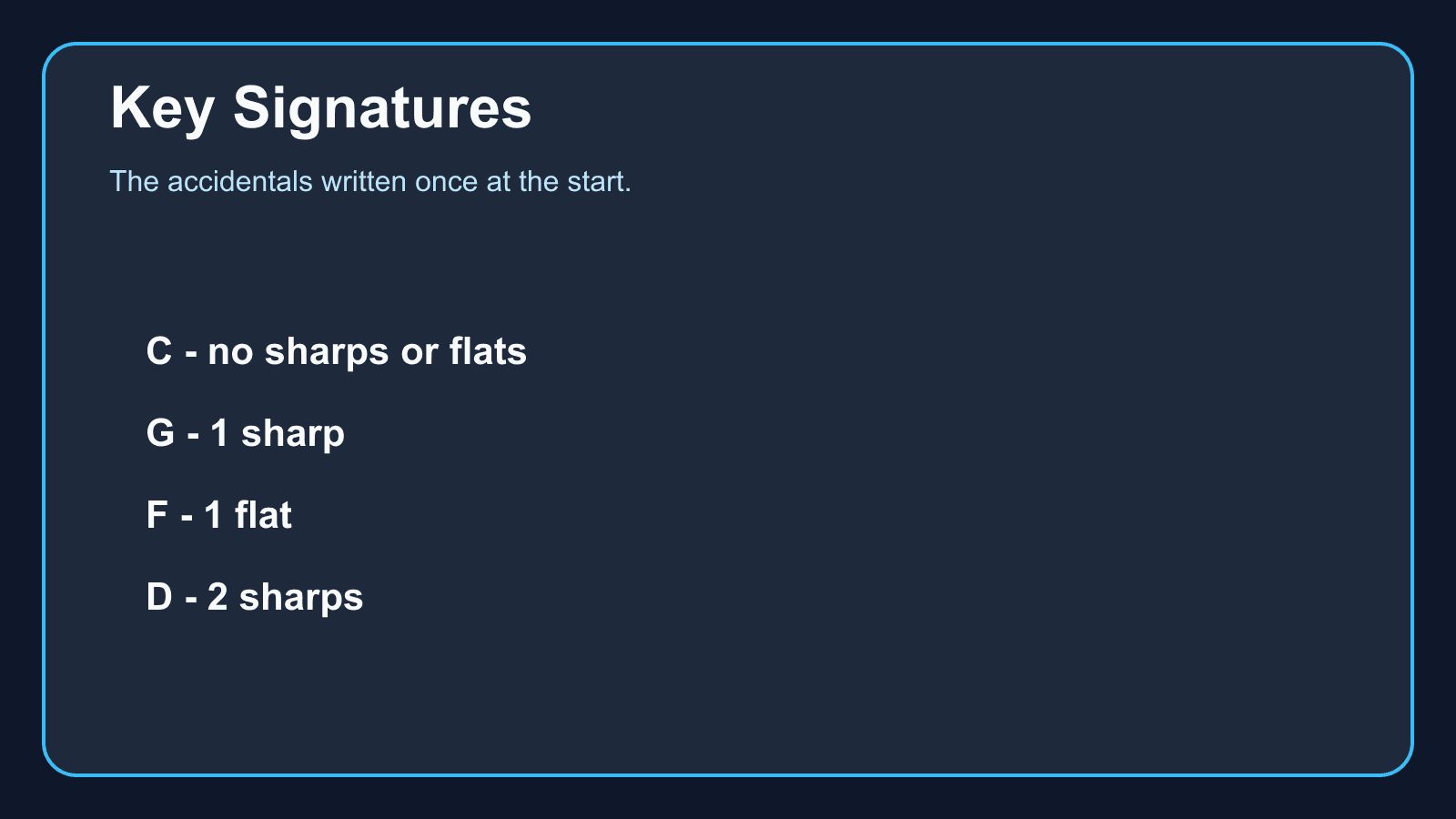
Four signatures to recognize
- CNo sharps or flats
- G1 sharp
- F1 flat
- D2 sharps
What the signature tells you
The signature names the notes that stay sharp or flat. It does not by itself tell you whether the music feels major or minor. C major and A minor share an empty signature. G major and E minor share one sharp. You still listen for the home note.
On this site the signature count comes from the key’s place on the circle. C has none. Each clockwise step adds one sharp, up to six at F♯ / G♭. Each step the other way adds one flat.
The first signatures to recognize
No sharps or flats is C major or A minor. One sharp is G major or E minor. One flat is F major or D minor. Two sharps is D major or B minor. The chart on this page uses that same order.
Reading which line or space gets the sharp is the next lesson: How to Read Sharps and Flats.
How this differs from the circle lessons
The circle lessons are about the map of keys. This page is about the symbol at the start of the staff. You can use either one without repeating the other.
When you are ready to pick a key for your hands, read How to Choose a Musical Key on Piano.
Start practicing piano chords with Looty Chords
Begin your free trial, compare plans, or read answers to common questions about chord practice and MIDI setup.