
Skipping piano chord practice for a few days will not undo your progress, but going weeks without touching the keys makes chords feel noticeably rustier. What fades first is speed and automatic recall, not understanding—you will likely still know a chord's notes, just not be able to find them instantly the way you could with regular practice. This is normal, not a sign of failure, and it is fully recoverable.
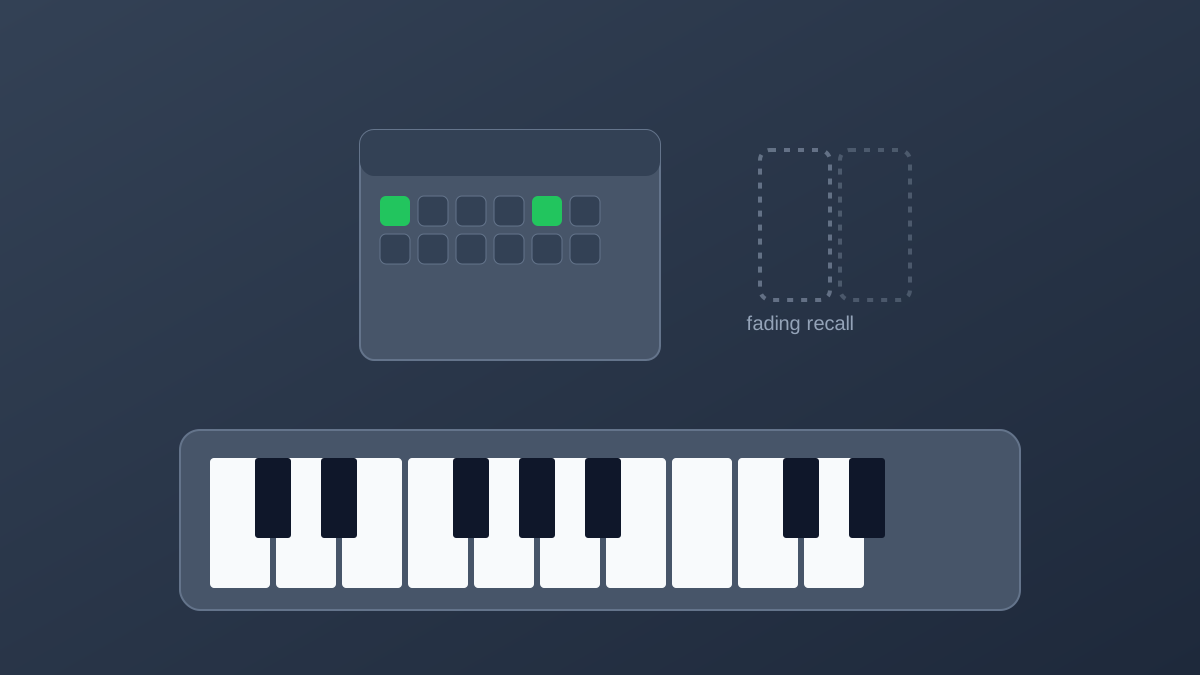
What Actually Fades Without Practice
- Speed of recall—finding a chord shape takes longer, even if you still remember it in theory.
- Smoothness of transitions—chord changes that felt automatic start requiring conscious thought again.
- Muscle memory—your fingers stop "knowing" a shape without your eyes checking it.
- Pattern recognition under pressure—recognizing a chord quickly in a random sequence gets harder than recognizing it slowly and deliberately.
What Does Not Disappear
Conceptual understanding tends to stick around much longer than physical fluency. If you understood why a chord is built the way it is, or how a progression resolves, that knowledge does not vanish after a two-week break the way finger speed does. This is why picking chords back up after time away usually feels faster than learning them the first time—you are rebuilding, not starting over.
If forgetting specific chords is the bigger issue for you, Why Do I Keep Forgetting Piano Chords? covers why that happens and what helps it stick.
Why Consistency Helps More Than Intensity
Motor skills like chord changes are built through spaced repetition—your fingers need regular reminders, not one long session followed by silence. Someone practicing fifteen minutes most days will typically retain chord fluency better than someone practicing two hours once a week, even though the weekly total practice time might be similar.
For a realistic look at session length, see How Long Should a Beginner Practice Piano Every Day?.
A Missed Week Is Not a Setback That Erases Progress
Life gets in the way of practice schedules constantly, and that is completely normal—it does not mean you have to start over or that your earlier practice was wasted. The skill you built is still there; it just needs a few sessions to come back to full speed. Treating a gap as a minor rust patch rather than a failure makes it much easier to simply pick the habit back up.
Sustainable consistency—showing up most of the time, forgiving the days you miss—builds far more lasting skill than an all-or-nothing streak mentality that collapses the first time life interrupts it.
Getting Back Into a Chord After Time Away
The fastest way back is not to relearn from scratch—it is to slow down, play the rusty chord a few times deliberately, and then reintroduce it into random-order drilling. Your fingers relearn shapes faster the second time around because the underlying pattern recognition is still there, just slower to access.
Open Practice Mode and start with your weakest chords first—Looty Chords randomizes prompts so rusty shapes get reinforced instead of skipped.
Pick the habit back up, no penalty for the gap
A break does not erase your progress. Jump back into randomized practice and your fluency comes back faster than it took to build the first time.