
Piano chord changes feel hard at first because your hand is not just learning two chord shapes—it is learning the specific physical path between them, under time pressure, while your brain is still consciously naming each shape instead of recognizing it instantly. That combination is genuinely demanding for a beginner, and it is a temporary stage, not a sign that chord changes will always feel this difficult.
It Is Not One Skill—It Is Several, All at Once
Playing a single chord requires recognizing the name, recalling the shape, and positioning your fingers. Changing between two chords adds a fourth task: physically moving from one specific hand position to another, ideally without looking. Early on, your brain is doing all of this consciously and sequentially, which is slow and effortful compared to how it will feel once the transition becomes automatic.
This is why isolated chords often feel much easier to play than the same chords in sequence—changing chords is a distinct skill from knowing them individually.
Your Hand Is Building an Entirely New Motor Pattern
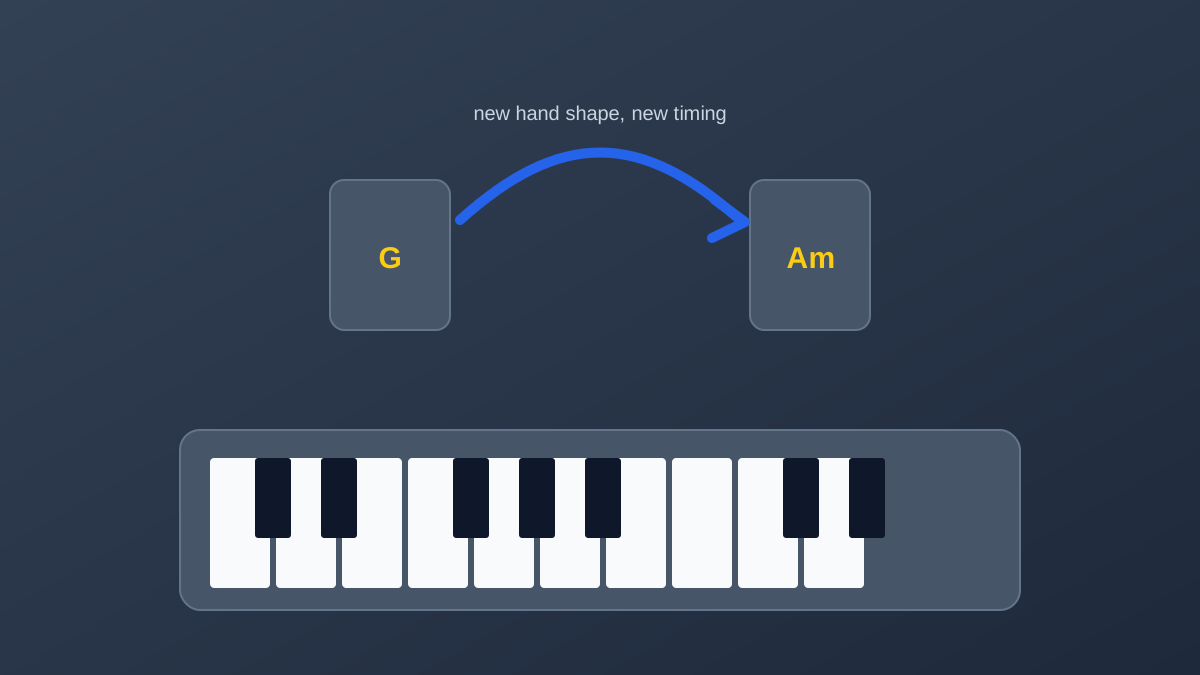
Each chord-to-chord transition is its own unique motor pattern that your hand has never practiced before, even if you already know both chords individually. Going from C to F feels different from going from C to G, because the finger movement involved is different in each case. Beginners often assume knowing the destination chord should make the change easy—but the transition itself has to be learned separately.
This is a normal part of motor learning, not a sign you are approaching chords the wrong way. Repetition of the specific pair is what smooths it out.
Timing Pressure Makes It Feel Harder Than It Is
Practicing chord changes with a metronome adds real pressure: you have to land the new shape by a specific moment, not whenever you happen to be ready. That pressure is exactly what real songs demand, but it makes early practice feel more difficult than untimed noodling would.
The fix is not to avoid the metronome—it is to slow it down. Practicing a hard transition well below tempo, then gradually speeding up, is more effective than trying to force it at full speed. See How to Practice Chord Changes for a structured way to do this.
It Does Get Easier—Here Is Why
As a specific transition gets repeated, the motor pattern moves from conscious, effortful control to something closer to automatic reflex. This is the same process that makes typing on a keyboard feel effortless after enough practice—early letter-by-letter searching eventually becomes fluent, unconscious movement.
For techniques focused specifically on speeding up this process, see How to Switch Piano Chords Faster.
Targeted Practice on the Hard Pair Helps Most
Instead of drilling an entire progression repeatedly, isolate the specific chord pair that keeps tripping you up and loop just that transition for a few focused minutes. Two minutes of targeted practice on a weak pair often does more than ten minutes of general drilling that only briefly touches it.
Open Practice Mode and slow the tempo down until the transition feels clean before speeding back up.
Practice the transition, not just the chords
Chord changes are their own skill, separate from knowing individual chords. Slow down, isolate the hard pairs, and let repetition do the rest.