
If you keep forgetting piano chords you thought you already knew, you are not doing anything wrong—this is one of the most common and most normal parts of learning an instrument. It usually comes down to a few specific, fixable causes: not enough repetition, practicing chords in the same predictable order, or not yet using the chord in a real musical context. None of it means you lack talent.
Forgetting Is a Normal Part of Learning, Not a Warning Sign
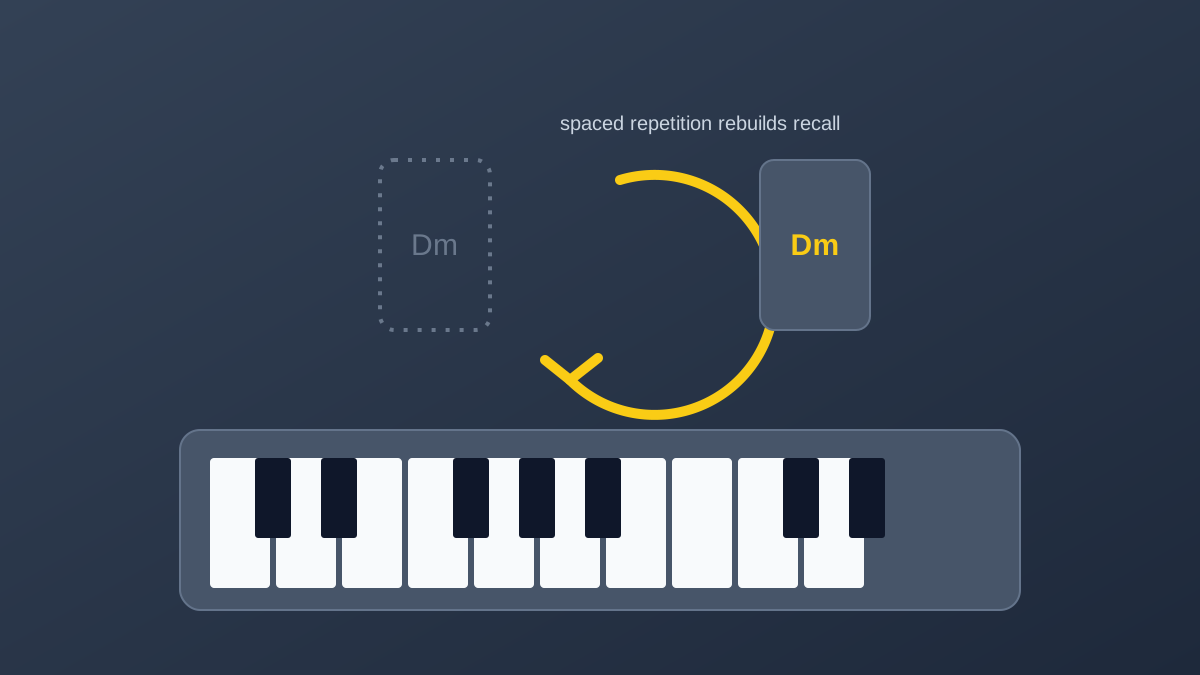
New information—including a chord shape—naturally fades without reinforcement. This is true for everyone, not just beginners or people who struggle with piano specifically. The forgetting itself is not the problem; it is expected. What matters is whether your practice habits give a chord enough repeated exposure to move from "recognized once" to "recalled instantly."
Feeling frustrated after forgetting a chord you played cleanly last week is understandable, but it is not evidence you are behind or doing something wrong. It is simply how memory works before a skill is fully consolidated.
The Most Common, Fixable Causes
- Not enough repetition—a chord played correctly once or twice has not had enough reps to become automatic yet.
- Practicing chords in the same fixed order every time—your fingers learn "what comes next," not the shape itself, which falls apart the moment the order changes.
- Never playing the chord in a random or unexpected context, like a real song or an unpredictable drill.
- Long gaps between practice sessions, which give recall more time to fade between reinforcements.
- Relying on watching a diagram instead of building the physical muscle memory of the shape.
Why Random-Order Practice Fixes This Specifically
If you always practice chords in the same sequence—say, always C, then F, then G—your fingers can start anticipating the next shape instead of truly recognizing each chord independently. That pattern falls apart the instant a chord appears out of order, which is exactly what happens in real songs.
Randomized drilling forces true recognition instead of sequence memory. Open Practice Mode, where chords appear in random order with a metronome, to build the recall that actually holds up outside a fixed pattern.
Building Lasting Recall
Long-term chord recall comes from muscle memory—your hands finding a shape without conscious searching—more than from memorizing facts about the chord. That kind of recall is built through repeated, spaced practice, not through reading about a chord or looking at a diagram once.
For a deeper look at how muscle memory actually forms and how to memorize chords more effectively, see Chord Muscle Memory and How to Memorize Piano Chords.
If Practice Gaps Are the Real Cause
Sometimes forgetting is less about how you practice and more about how often. If chords fade because sessions are infrequent, the fix is consistency rather than a different practice method entirely.
See What Happens If You Don't Practice Piano Chords Regularly? for what actually fades during a gap, and how quickly it comes back once you resume.
Rebuild recall with randomized practice
Forgetting a chord is not a setback—it is a signal to reinforce it. Drill your weak chords in random order and watch recall come back faster than the first time.