
Guitar chords for beginners are easiest to learn when you can see the shape on a fretboard, hear the chord, and understand which notes you are playing. The Looty Chords guitar chords reference at /chords includes a dedicated Guitar view for exactly that. Switch from Piano to Guitar on the same page to explore guitar chords by key without hunting through scattered chord diagrams online.
What is the chords reference screen?
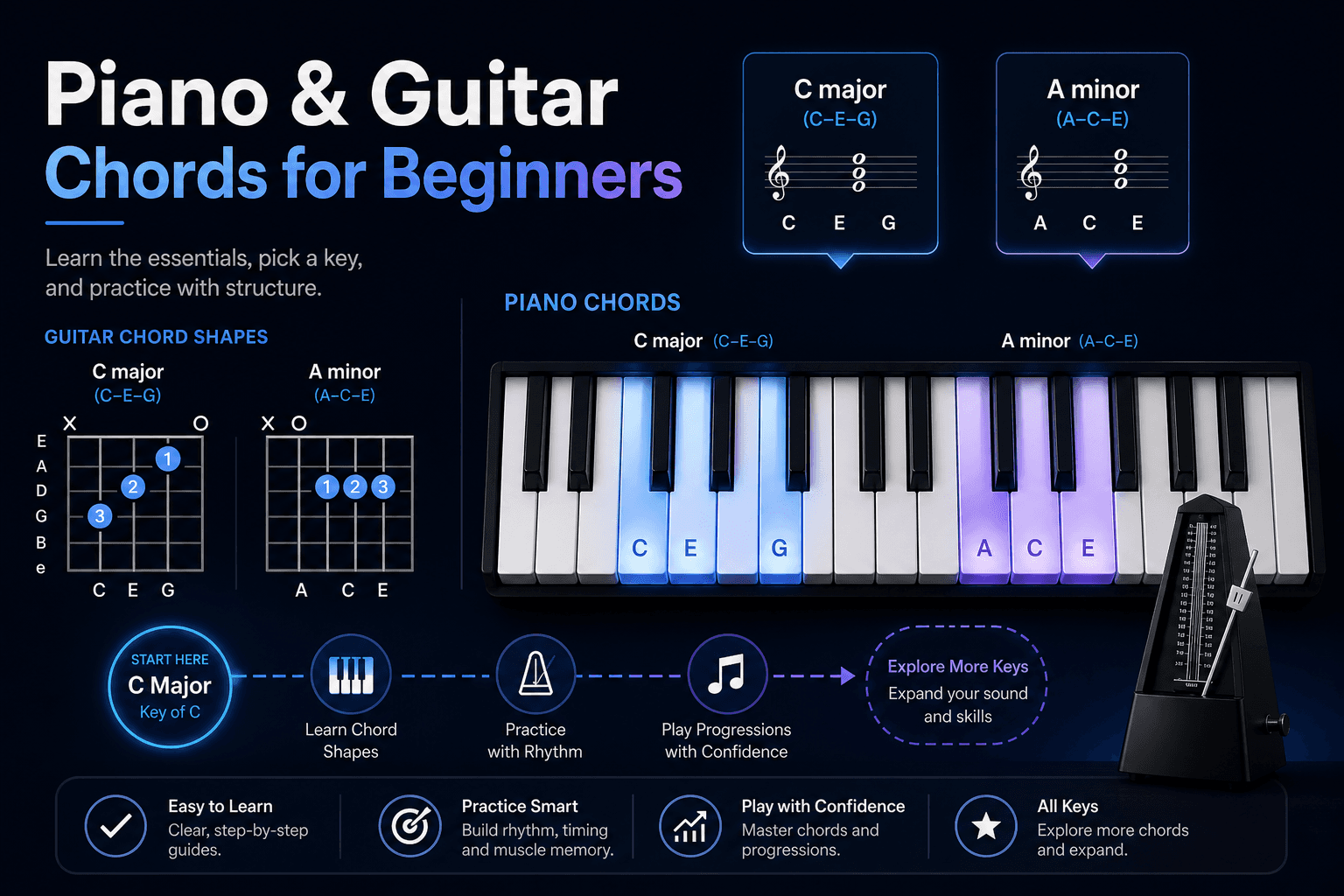
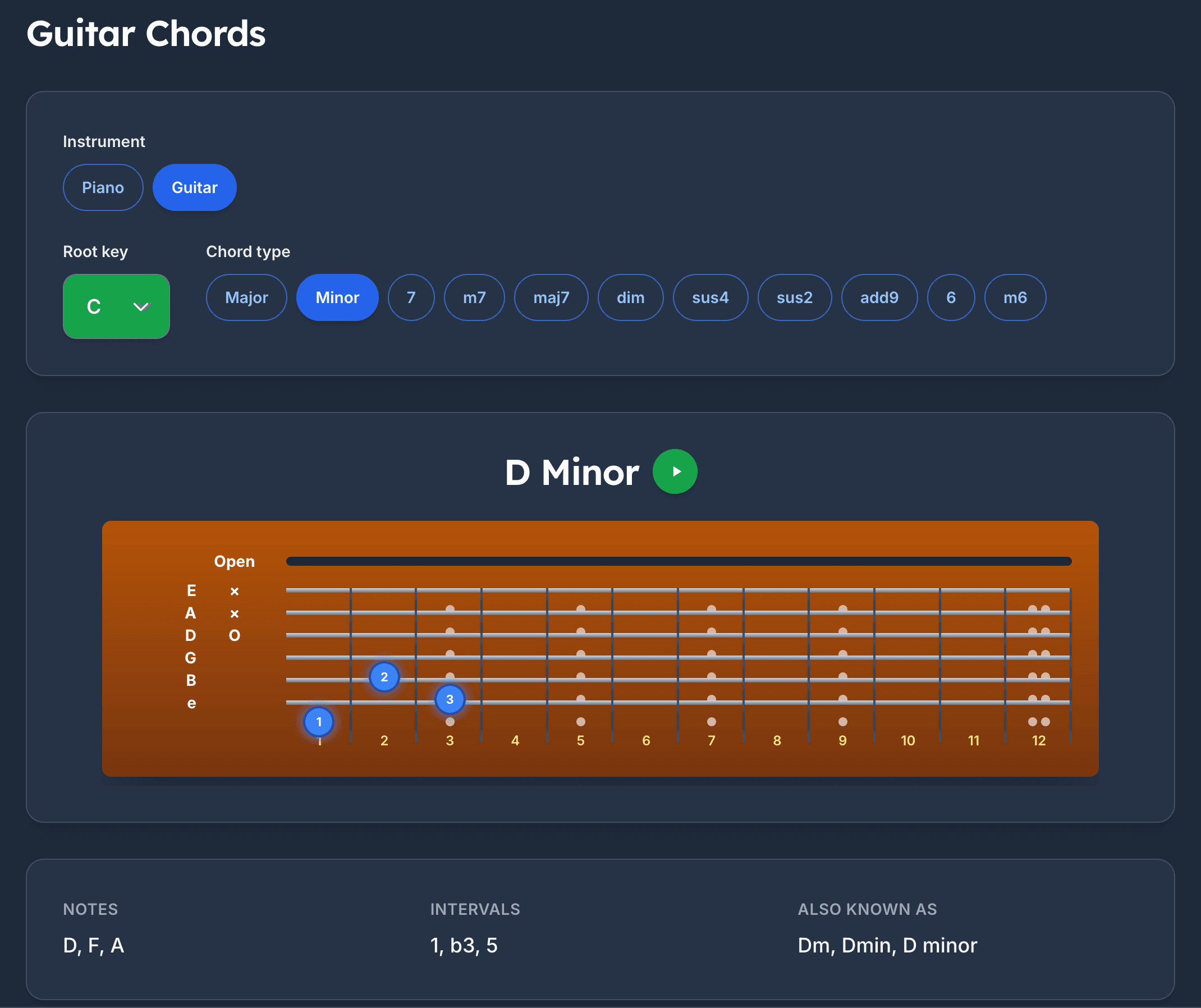
The chords reference is an interactive tool where you choose a root key and chord type, then see how that chord is built on guitar. The Guitar view shows a horizontal fretboard with string labels, open and muted string markers, fret numbers, and blue finger dots for recommended placement.
Below the fretboard you will find the same chord details as the piano view: note names, intervals, and alternate names. A play button lets you hear the selected chord using guitar samples—the same tone family used on the Go Practice guitar screen.
Open /chords and select Guitar to use the guitar chords reference described here.
How the guitar chords reference works
- Open /chords and click the Guitar toggle at the top of the chord selector.
- Choose a root key and chord type—Major, Minor, 7, m7, maj7, and more.
- Read the chord title (for example, F Major) and press play to hear the chord on guitar.
- Study the horizontal fretboard: string labels read E A D G B e (lowercase e is the high E string).
- Look for × on muted strings, O on open strings, and numbered blue dots where fingers press down.
- Use fret numbers along the bottom to confirm position; check notes and intervals in the details card.
- Tap chords in the “Chords in the Key of” section to compare related shapes in the same key.
If a guitar shape is not available yet for a rare chord type, the fretboard shows a friendly fallback message while note and interval information still displays. Playback uses the correct chord tones even when a diagram is missing.
Why it helps beginners
Beginners often struggle to connect chord names on a chart to a physical shape on the neck. A guitar chord chart that updates instantly for each root and type removes that guesswork. You see finger placement, open strings, and muted strings in one place.
Learning guitar chords by key—not just as isolated diagrams—helps you understand which chords appear together in songs. The diatonic grid mirrors how musicians think about keys on both piano and guitar.
New to chords in general? What Are Piano Chords? explains chord basics in instrument-neutral language that applies to guitar too.
Benefits of using the guitar chord reference
- See a clear guitar fretboard diagram for common open-position major, minor, and seventh chords.
- Learn string labels, muted strings (×), open strings (O), and finger dots in one view.
- Hear guitar chord tones with the play button—useful for ear training and verification.
- Read note names, intervals, and aliases to connect shapes to music theory.
- Explore guitar chords by key with the diatonic chord grid.
- Switch between Piano and Guitar on the same page when comparing instruments.
- Use the reference before guitar chord practice to memorize shapes faster.
See the guitar chords reference in action
The Guitar view uses a wide horizontal fretboard similar to the Go Practice guitar layout. String labels sit in a left column; open and mute indicators appear beside each string; finger dots mark where to press for the selected chord.
Chords in the key of…
The “Chords in the Key of {root}” section lists diatonic chords for the major key you selected. Click any card to load that chord on the fretboard and update the details card.
Understanding major guitar chords and minor guitar chords within a key makes progressions easier to learn. You will start to recognize that the vi chord is minor and the IV chord is major across keys—not just in one isolated diagram.
For chord relationships and progressions, see Chord Progressions and Major Chords.
From reference to guitar chord practice
The chords reference is perfect for learning shapes and checking finger placement. When you want timed drills, chord changes, and metronome practice, move to Go Practice with guitar mode.
Read How to Practice Piano Chords for practice principles that apply to any instrument, including guitar.
Browse Piano Chords for Beginners if you also play keyboard and want to compare chord concepts across instruments.
Open the guitar chords reference
Explore guitar chords by key on a horizontal fretboard, hear each shape on guitar, and see how chords connect in a key—then practice with timing in Go Practice.