
Piano is not effortless, but it is more approachable than its reputation suggests—especially if you start with chords instead of full notation. Some parts of piano are genuinely easy to pick up in your first sessions. Other parts take sustained practice over months. The honest answer is that difficulty is not one fixed thing; it changes depending on what you are trying to play and how you choose to start.
What Is Actually Easy at First
Finding notes on a keyboard is straightforward—unlike a violin or guitar, the piano lays pitches out in a fixed, visible line, so there is no pitch-guessing involved. Playing a single chord, one hand, in a comfortable key like C major is also genuinely accessible in your first sitting: press three notes together and you already have a real, musical sound.
This is why chord-first learning feels less intimidating than notation-first learning. You do not need years of theory to make music—What Are Piano Chords? and Piano Chords for Beginners cover exactly how little you need to know to start.
What Usually Becomes Challenging
- Hand independence—playing different rhythms or parts in each hand at the same time.
- Reading traditional notation fluently, especially two staves at once.
- Chord changes under tempo, where your fingers need to move to a new shape before the beat arrives.
- Complex rhythm—syncopation, mixed note values, and playing in time without a metronome.
- Deeper theory—extended chords, modulation, and improvisation beyond simple chord shapes.
Why Chords Simplify Getting Started
Chord-based learning sidesteps the steepest part of the traditional beginner curve: reading notation before you can play anything musical. Instead, you learn a handful of shapes, connect them with a metronome, and you are playing something recognizable almost immediately.
That does not make chords a shortcut around every skill—it changes the order you build them in. See How Piano Chords Help You Play Songs for how this approach connects to real repertoire.
Coordination and Timing Take the Longest
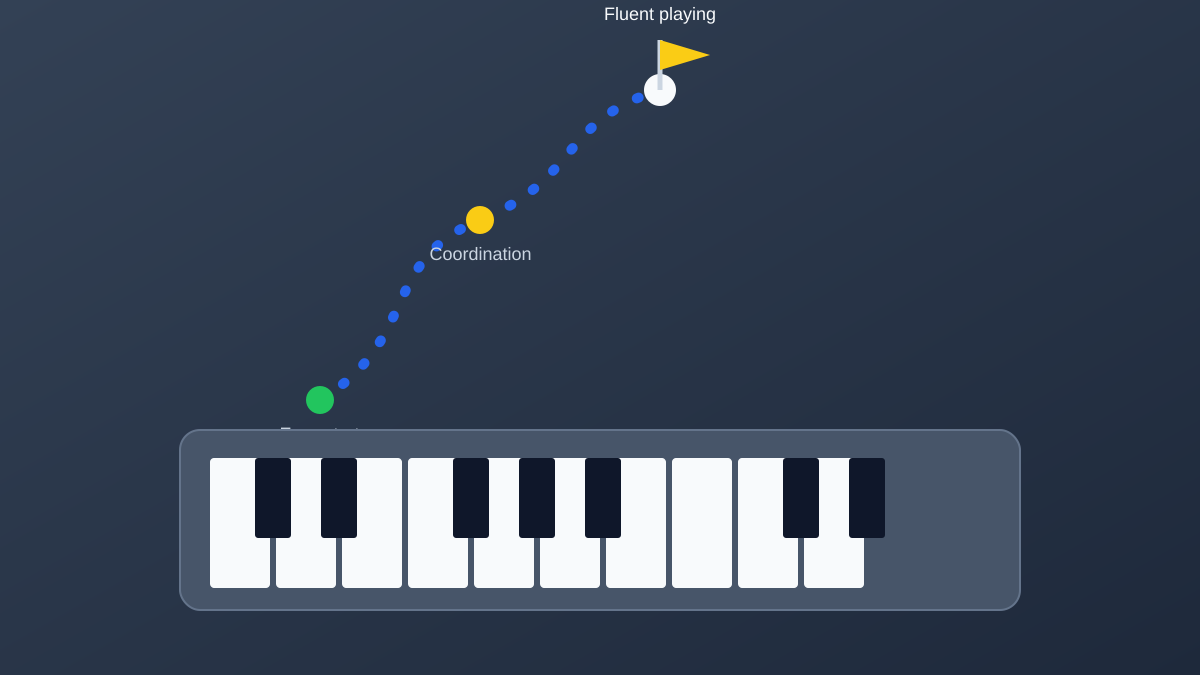
Most of piano's real difficulty lives in coordination: getting both hands to cooperate, landing chord changes exactly on the beat, and eventually layering melody over harmony. These are physical skills built through repetition, not conceptual ones—you cannot think your way to fluent hands, only practice your way there.
If chord changes specifically feel difficult right now, that is completely normal early on. Why Are Piano Chord Changes So Hard at First? explains why, and what actually helps.
Difficulty Changes as You Advance
What feels hard in week one—finding a chord shape, keeping a steady pulse—usually becomes automatic within weeks of regular practice. New kinds of difficulty appear as you advance: playing in unfamiliar keys, reading more complex charts, or adding extensions and inversions. That is a sign of progress, not a sign that piano never gets easier.
This is also why comparing your week-one experience to an experienced player's current playing is misleading—you are looking at two completely different stages of the same skill curve.
The Realistic, Encouraging Answer
Piano rewards consistency more than natural talent. Short, regular practice sessions—even fifteen to thirty minutes—build real skill steadily, and chord-first practice means you are playing something musical from very early on, not just drilling exercises that do not sound like anything yet.
Start with one key and a small set of chords, then build from there. Common Piano Chords Every Beginner Should Know is a good place to begin.
Start with chords, not everything at once
You do not need to master notation, theory, and coordination all in week one. Explore chord shapes visually, then build timing and confidence in Practice Mode.